Before the season started, we took a look at 10 freshmen who weren’t getting their due recognition as “impact freshmen and/or NBA prospects.”
Now, with the season over, let’s revisit those same 10 players, and evaluate their respective freshman campaigns.
As a reminder, this list excludes McDonald’s All-Americans and recruits from the “top classes” (Kentucky, Kansas, Duke, Arizona, Florida, North Carolina). I have only included prospects who I have seen live.
Players ranked in order of NBA potential. Preseason ranking in parenthesis.
1. Jordan Mickey, LSU (5)
2. Troy Williams, Indiana (4)
3. Robert Hubbs III, Tennessee (1)
4. DeAndre Bembry, Saint Joseph’s (10)
5. Devin Williams, West Virginia (6)
6. Kuran Iverson, Memphis (3)
7. Shannon Hale, Alabama (7)
8. Christian Wood, UNLV (8)
9. Eric Mika, BYU (9)*
10. Jermaine Lawrence, Cincinnati (2)
*Eric Mika is ranked low partly because he’s leaving for a two-year LDS Church Mission next month.
*If the videos do not appear, “refresh” the webpage once.
- View As Single Page
- Jordan Mickey
- Troy Williams
- Robert Hubbs III
- DeAndre Bembry
- Devin Williams
- Kuran Iverson
- Shannon Hale
- Christian Wood
- Eric Mika
- Jermaine Lawrence
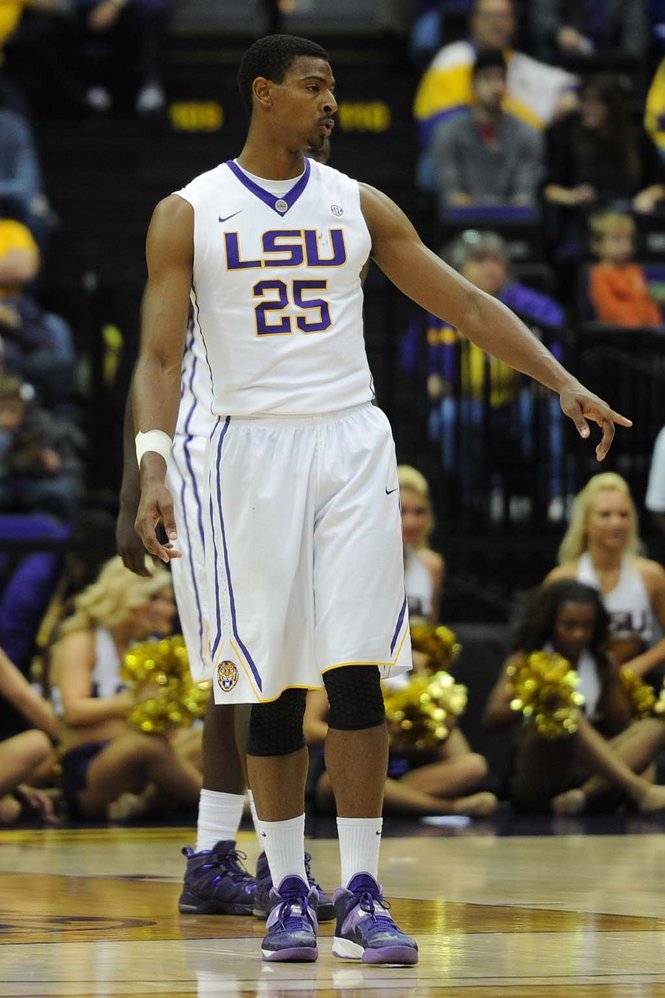
1. Jordan Mickey | LSU
SF, 6-8, 220
19 years old
Season (32 mpg): 12.7 PPG, 8 RPG, 1 APG, 3 BPG, 0.6 SPG
53% FG, 0-4 three-point
9.6% block percentage (46th nationally)
Trending: Up
Outlook: Before the season, I wrote: Some believe Mickey’s NBA prospects are far off, and should be revisited down the line. From my perspective, though, Mickey is “on the cusp”; he’s not that far away. Right now, he is a bouncy athlete with tenacious rebounding instincts and on-ball defense. He projects to continue improving, and if he can tighten his ball handling and extend his jumpshot, he has a chance to be an NBA player. I believe Mickey is a jump shot away from cementing himself as a first-round draft pick.
Mickey delivered on those preseason expectations, and then some. He averaged 13 points and 8 rebounds on 53% shooting, and recorded the 5th-most blocks in all of college basketball. His NBA-level athleticism, defensive prowess, and the ability to finish above the rim (in transition and half court) have solidified him as a potential first-round pick next season. Mickey has the athleticism to defend both 3s and 4s, as he can block shots 1-on-1 or from the weak side.
But the missing piece is his jump shot. Mickey doesn’t have the post skills to survive as an undersized back-to-the-basket player; he needs to extend his range to make the defense respect him, which in turn will open driving lanes. Only 19% of Mickey’s attempts this season were jump shots, compared to an aggregate 79% of attempts around the basket. He flashed a mid-range game (11-24 on the season), which is encouraging, but Mickey must show consistency next season. His confident gather and high release leave me optimistic, but he’s yet to prove he can shoot it with consistency.
Mickey didn’t possess any mid-range skills entering college, so these early strides are encouraging. He just needs to tighten it up, and hopefully extend his range to the 3-point line. So yeah, there’s work to do, but you simply can’t ignore the impact he’s already been able to make.
Mickey is a bouncy 6-8 athlete who scores below the foul, rebounds with a purpose, and protects the rim. Early signs of a jump shot are there, but his consistency next season will be the biggest indicator. If he can extend his range—and that’s no easy task—I think he’ll be in the running for SEC Player of the Year, and should end up as a first-round Draft pick.
Video
Blocks
Transition
Finishing Around the Basket
Rebounds (Put-backs)
Shooting Struggles
Mid-Range Makes

2. Troy Williams | Indiana
SF, 6-7, 195
19 years old
Season (21.5 mpg): 7.3 PPG, 4.5 RPG, 1 APG, 1.0 SPG
51% FG, 6-29 three-point
Trending: Up
Outlook: As expected, Williams had a productive freshman season playing on a young Indiana team. He showcased his jack-of-all-trades abilities as an athletic swingman with a high motor. Most of all, though, he began the process of refining his mostly raw skills, which is very encouraging.
His profile remains as a 6-6 swingman with blazing speed, an extraordinary second bounce, and a high-effort player on both ends. He’s physically gifted, plays hard and selfless. He may not be as tall, but on the surface he reminds me of a young Shawn Marion: A lanky swingman, with incredible bounce, the ability to “fly up and down the court”, and the energy/activity to defend 3s and some 4s at a high level. Again, Williams is shorter than Marion, but the comparison is there.
Williams is very effective in the open court due to his athleticism and energy. He gets ahead of the defense running the wings in transition, and he is automatic on the break.
In the half court, with still-unrefined skills, Williams is most effective slashing off the ball, where he uses his length and athleticism to finish in the paint. Williams is also a terrific offensive rebounder, as his athleticism and activity give him a chance at every 50-50 ball. He doesn’t simply get rebounds; he finishes above the rim with authority.
So, overall, Williams is a monster in transition, and has shown promise in the half court. His length and activity also make him a promising defender, although he gambles too much for my taste at this time.
In terms of weaknesses, right now Williams is lacking as a playmaker, and he doesn’t have a great jump shot. He struggles to create off the dribble and to create for his teammates, and he lacks a consistent shooting stroke. Only 30% of his attempts are jump shots, on which he converts only 29%. He shot 6-29 from 3-point range this season.
If Williams can develop a jump shot—or takes strides forward as a facilitator—I think he’ll garner first-round Draft consideration next season.
His vertical explosion combined with length and great defensive instincts make him an NBA talent. He’s rapidly refining his game, and if he continues to develop as a sophomore, Williams should end up in the Draft conversation.
Video
Transition
Shooting Struggles
Cutting
Crashing Boards
Off the Dribble Struggles
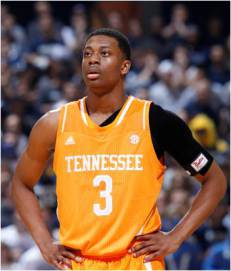
3. Robert Hubbs III | Tennessee
SG, 6-5, 190
18 years old
Season (12 games, 18 mpg): 5 PPG, 1.5 RPG
31% FG, 9-32 three-point
Trending: Unknown
Outlook: Hubbs’ freshman season was cut short due to injury. After only 12 games, he underwent season-ending surgery on his left shoulder, re-aggravating an injury that has hampered him since high school. Hubbs entered college with pain in his shoulder, wore a soft brace during the year, and finally opted to have surgery. To make matters worse, Hubbs wasn’t eligible to receive a medical redshirt, because he played in more than 30 percent of Tennessee’s games.
Over the course of 12 games, Hubbs averaged 5 points and 1.5 rebounds in 18.3 minutes. Obviously, the numbers aren’t impressive.
That said, during his freshman year, Hubbs occasionally flashed NBA-level potential as a scoring and rebounding shooting guard. At 6-5 and 190 pounds, Hubbs has deep range on his jump shot, and terrific body control to finish off the bounce. He’s a high-level athlete — very long, very fluid, and explosive enough.
But there’s no telling how he will return from a nagging injury. At this point we have to wait and see. A silver lining is that, with Jordan McRae and Antonio Barton graduating in the spring, Hubbs should have his chance next season.
If he makes a full recovery—and that’s a big if—Hubbs can make a huge impact next season. He’s young for his age still, and has the talent that drew me to him a few years ago. He’s too young and talented to already dismiss.
The best case scenario is that Hubbs will return next season, start at SG, and make his mark in the SEC. It’s difficult to project his NBA future at this point, but I can’t dismiss that, either. I’ve seen Hubbs dominate several of the “top freshmen,” and I still believe he’s capable of doing so in college.
Video
3-Point Shooting
— Only 9-32 on the season, but Hubbs smooth form is apparent. He can develop into a reliable 3-point shooter.
Spot Up Makes
— Hubbs flashes “NBA moves” on some plays, but then he appears timid on others. Smooth scorer, but he needs to develop a “mean streak.”
Transition Attempts
— Only 2-9 on the season. I’d like to see him attack the basket more, instead of settling for transition 3′s.
4. DeAndre Bembry | Saint Joseph’s
SF, 6-6, 165
19 years old
Season (32 mpg): 12 PPG, 4.5 RPG, 2.7 APG, 1 SPG
46% FG, 35% three-point (3.1 attempts)
Trending: Up
Outlook: Bembry met early expectations at St. Joe’s, and then exceeded them. The A-10 co-Rookie of the Year, he is a lanky swingman whose primary impact is on the defensive end. He’s already an excellent on-ball defender.
At 6-6 and with good length, Bembry has the physical tools to lock up on defense. He moves well laterally, has the length to contest, and has terrific anticipatory ability off-the-ball and in passing lanes. But equally as important, Bembry competes his but off on every possession. He never, ever, takes a play off, and he is long, athletic and focused. He gets all the 50-50 balls, and loves doing the dirty work. As a freshman, he’s already guarding the other team’s best player, which should accelerate his development as a defender. Good size, excellent physical tools, and an eagerness to defend give him tremendous upside defensively.
Bembry isn’t prolific offensively, but he’s no slouch either. Averaging 12 points on 46% shooting leaves me optimistic. The insane motor and refusal to take plays off carry over to offense as well.
He’s most effective as a cutting and slashing small forward right now, using energy and athleticism to attack the basket. Bembry attacks “going downhill,” astutely dipping his shoulder to certain angles in order to let his athleticism finalize plays. He can finish at the rim or pull up for a soft tear drop. Explosive in transition, and silky-smooth in the half court. He’s an unselfish player who gets his buckets within the flow of the offense.
Bembry is a good rebounder, using length and physicality to collect rebounds through traffic. He’s had 12 games with at least 6 rebounds, but he needs to be more consistent.
For all the good qualities, though, Bembry has his fair share of weaknesses, too. He needs to tighten his handle and jump shot. He can’t beat his man off the dribble right now, and is converting 33% on jump shots (51% of all attempts). He also has a slow release on his jump shot, and his release point is concerning—he releases the ball from his chest, a la Marion. His shooting form is not as awkward as Marion’s, but it must be fixed, and in a hurry.
This has been a great year for Bembry—not only is he gaining invaluable experience, but he’s also heavily counted on by his team. Thus, he’s held accountable every game. Being tasked with the hardest defensive matchup—whether it’s a point guard or SG/SF—is not easy.
Bembry’s development this upcoming summer is vital. If he can develop his ball handling, and show improved shooter, he could emerge on the NBA Draft radar as early as next season. He had a lot of potential as a senior in high school, and has clearly taken huge strides during his freshman year. Only 19 years old, Bembry is one of the most talented—and underrated—small forwards in the country, regardless of class.
Video
Defense
Misses
Scoring / Attacking
35% From 3-Point
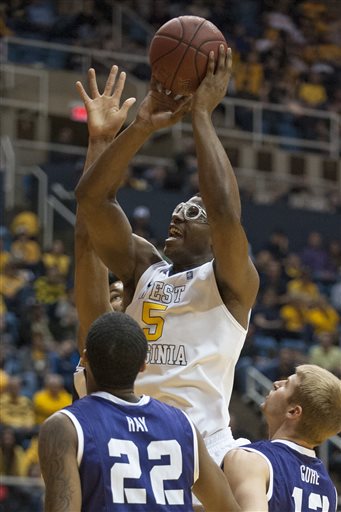
5. Devin Williams | West Virginia
PF, 6-8, 200
20 years old
Season (23 mpg): 8.4 PPG, 7.2 RPG, 3 Fouls
41% FG
23.4% defensive rebounding percentage (57th)
Trending: Up
Outlook: I’m still not fully sold on Williams’ NBA prospects, but there’s no denying he’ll probably excel in the NCAA. As a freshman, Williams recorded a team-high 7.2 rebounds in 23 minutes per game. He was a physical and rugged forward who consistently out-muscled opponents in the Big 12.
Williams’ offensive game is hard to define, at least for me. He has a chiseled frame to bang opponents down low, particularly when finishing put-backs and drop-offs at the basket. And he has a polished mid-range jump shot. So, overall, he can finish on the glass, or step out and shoot it. But his Achilles heel has been his inability to create his own shot, because he’s not agile enough (a la Kenneth Faried) to make it to the NBA simply on put-back finishes.
In addition to put-backs and a mid-range jump shot, Williams does all the “little things”—setting screens, rebounding, playing with energy—consistently well. He has terrific pick and pop potential, which adds an intriguing dimension to his game.
Defensively, right now Williams struggles as an on-ball defender. He averages 3 fouls in only 23 minutes per game, mostly due to poor footwork in the post. He has the strength, but he must refine his game to become more disciplined.
Going forward, Williams must add at least one “go-to” post move. Right now, he posts up often (30% of shot ), but he is clueless with the basketball. He must also show he can defend without fouling.
All things considered, Williams had a solid freshman season — he proved that his rebounding ability, toughness and jump shot translate at the highest level. With continued development, Williams should gradually rise to the national surface.
Video
Offensive Rebounds
Defensive Rebounds
Mid-Range Jump Shot
Driving Struggles
Left Block Misses
Right Block Misses
22 Points vs. Kansas
— March 8. Season-high 22 points on 8-10 shooting.

6. Kuran Iverson | Memphis
SF, 6-9, 205
20 years old
Season (9 mpg): 2.5 PPG, 1.6 RPG
19-45 field goals, 19- three-point
172 total minutes
*Kuran is cousins with Allen Iverson, although they do not maintain a close relationship.
Trending: Unknown
Outlook: I can’t figure out why Iverson hardly played this season. He ran the gamut of injuries, though none of them lingered or were serious, making his absence on the court suspect.
Iverson possesses natural talent, and if this list was ranked purely on talent, Iverson would rank near the top. He’s 6-9, lanky and athletic, with a tight handle and great first step. These qualities make him a mismatch as a versatile and well-sized forward who can handle the ball on the perimeter, slash and finish in the lane, and defend multiple positions.
But again, he hardly played this season, and because Iverson is playing for Coach Pastner—who frankly doesn’t have a history of developing players—I’m concerned.
Iverson has a broken jump shot right now, which needs to be fixed.
I think Iverson has potential NBA talent, but it may not be properly cultivated at Memphis. Will Barton and Adonis Thomas didn’t develop as expected, and Joe Jackson—a 2010 McDonald’s All-American—is in school still, as a senior. Iverson always had a cloud looming over him off the court, and it seems to have carried into Memphis. Just a baffling situation. So far he’s underachieved, and as I’ve seen in the past, these things can snowball quickly.
Let’s see if he plays more next season.
Video
Versatile Scoring Ability
Poor Shooting

7. Shannon Hale | Alabama
SF, 6-8, 210
19 years old
Season (22.5 mpg): 8.8 PPG, 3.6 PRG, 1 APG
43% FG, 35% three-point (2.8 attempts)
Trending: Up
Outlook: A 6-8 small forward, Hale is a smooth athlete with a high basketball IQ and natural feel for the game. As a freshman he showcased the ability to shoot 3′s and space the defense. He also showcased the ability to drive the ball with strength and coordination, an aspect of his game that was severely lacking in high school.
Hale can catch-and-shoot from deep, or pick-and-pop. His smooth style is reminiscent of, say, Jared Dudley.
With Trevor Releford and Levi Randolph graduating, Hale should be a focal point Alabama’s offense next season, and eventually he could become the primary scorer on this Alabama team, something nobody expected to happen this quickly. Hale is still a long way away from being an NBA prospect — he’s too lithe and plays a bit too slow on both ends of the floor — but next season he’ll have an opportunity to showcase his development. Let’s see if he can bring it together, in a consistent fashion.
Video
Driving Right
3-Point Shooting
Pick and Pop – Misses
Pick and Pop – Makes
Cutting Misses
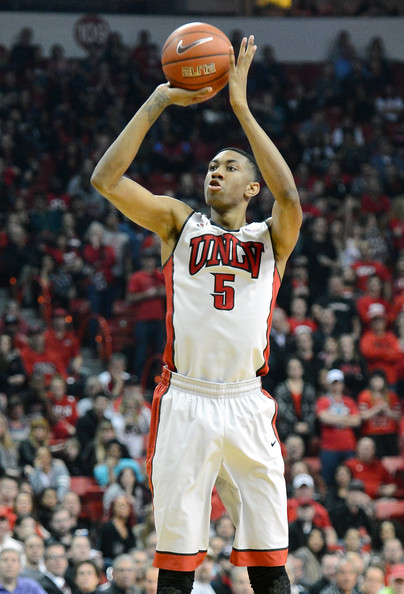
8. Christian Wood | UNLV
PF, 6-10, 210
18 years old
Season (13 mpg): 4.5 PPG, 3.2 RPG, 1 BPG
41% FG, 11-50 three-pointers
Trending: Down
Outlook: At 6-10 with a 7-2 wingspan, Wood is a long athlete who can hit the deep ball on the catch, but right now he’s just too skinny for the NBA game.
As a freshman nearly half of Wood’s shot attempts (50 of 117) were 3-pointers. He remains an effective, offensive mismatch, but he’s a perimeter-oriented player who’s devoid of interior skills. Per Synergy, Wood “popped” to the perimeter on all 21 of his pick-and-roll attempts this season (instead of diving to the rim). He’s too skinny to initiate—and even more concerning, to absorb—contact, and he lacks a back-to-the-basket game. Right now Wood is overly reliant on his jump shot and too skinny to bang in the post.
But he can shoot it from deep and he’s 6-10. The intrigue is based in “upside” not current production.
If Wood returns to UNLV next season (he needs a place where he’ll get minutes to develop), he needs to (a) add muscle; and (b) develop interior skills. Even an elbow jump shot would go a long way. But Wood won’t make the NBA as a one-trick pony from the 3-point line.
Wood’s combination of shooting, athleticism and rebounding are worth taking a look at only if he can add weight and a mid-to interior-range game. This summer will be vital in his development.
Video
Shooting Struggles
Around the Basket Makes
Finishing Struggles (weak)
9. Eric Mika | BYU
PF, 6-10, 230
19 years old
Quincy Lewis (high school coach): 801-368-4622
Season (25.6 mpg): 11.8 PPG, 6.4 RPG, 1 APG
53% FG, 5.5 FTA (62% FT), 3.2 fouls
Trending: Up
Outlook: Mika had a large impact as a freshman. A 6-10 post player, he is strong physically—which makes him a great rebounder—and he has a pure jump shot from the foul line.
So, overall, Mika’s best skills are his rebounding, foul line jump shot, and his consistent effort.
Mika has a “junkyard dog” mentality on the glass, as he tracks down rebounds with consistency. Down low, Mika knows how to seal his man and he can finish through contact.
Going forward, Mika needs to develop his offensive arsenal, to be more than just a face up player. He’s not a great athlete, so it’s difficult to assume that his rebounding ability will translate to the next level.
All that said, none of this is relevant for the immediate future because Mika is leaving for a two-year LDS Church Mission, beginning this spring. He will return to BYU at the start of the 2016-17 season, as a 21-year-old sophomore.
He needs to develop his post-up game, and show that he’s able to circumvent his limited athletic ability to dominate games. We’ll hopefully find out in 2016.
Video
Offensive Rebounds
Defensive Rebounds
Finishing Around the Basket
Face Up Misses
Post Up Makes
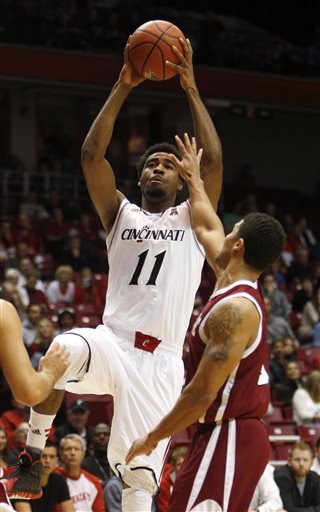
10. Jermaine Lawrence | Cincinnati
F, 6-9, 200
19 years old
Season (15 mpg): 2.8 PPG, 3 RPG, 2.2 fouls
33% FG, zero three-point attempts
Trending: Down
Outlook: Lawrence’s NBA stock dropped dramatically over the course of his freshman campaign. First, he was sidelined with turf toe for several weeks in January. Then, upon his return Lawrence struggled to couldn’t find a role on this Cincinnati team and caused me to wonder whether his game can translate to the NCAAs. The combination of Lawrence’s turf toe and wrist surgery he underwent during his senior year of high school has hampered his development over the last two seasons.
When Cincy has played Lawrence in the front court, it hasn’t been pretty. Defensively, he’s too fragile to defend the post, evidenced on film as well as his 2.2 fouls in only 15 minutes per game. Offensively, Lawrence lacks an interior skill-set, and he doesn’t have a jump shot from any range. Lawrence entered college as a versatile slasher who was trying to expand his game to the perimeter. After one season, he’s become a position-less forward—slashing can only take you so far—with no defined skill-set. On top of that, he’s already building a history of injuries.
Skill-wise, Lawrence is athletic and versatile. But he’s just not developing at Cincy—partly because he’s playing power forward, partly because he doesn’t get enough minutes or touches, and partly because he’s oft-injured.
Overall, it was a disaster of a freshman season for a top-40 recruit. Going forward, Lawrence needs to add muscle and get a chance to play on the perimeter, so we can gauge whether (a) he has a jump shot; and (b) if he can defend Small Forwards. If so, he could make a solid leap and gain his footing in the NCAAs.
Video
Weak Frame (defense)
Frenetic Plays (offense)
Offensive Rebounds / Put Backs
Missed Jump Shots
Poor Post Up
1. Jordan Mickey | LSU
SF, 6-8, 220
19 years old
Season (32 mpg): 12.7 PPG, 8 RPG, 1 APG, 3 BPG, 0.6 SPG
53% FG, 0-4 three-point
9.6% block percentage (46th nationally)
Trending: Up
Outlook: Before the season, I wrote this: Some believe Mickey’s NBA prospects should be revisited down the line. From my perspective, though, Mickey is “on the cusp” of breaking through. Right now, Mickey is a bouncy athlete with tenacious rebounding instincts and excellent on-ball defense. He has all the signs of a player who’s going to continue to improve, and if he can tighten his ball handling and extend his jumpshot, he has a chance to be an NBA Draft pick. I believe Mickey is a jump shot away from cementing himself as a first-round draft pick.
Mickey delivered on those preseason expectations, and then some. He averaged 13 points and 8 rebounds on 53% shooting, and recorded the 5th-most blocks in all of college basketball. His NBA-level athleticism, defensive prowess, and the ability to finalize plays at the basket (in transition and half court) have solidified him as a potential first-round pick next season. Mickey has the athleticism to defend either forward position, swatting balls 1-on-1 or from the weak side.
But the missing piece is still his jump shot. Mickey simply doesn’t have the post game to survive as a 6-8, 220-pound interior player; he needs to extend his range to make the defense respect him, and in turn open up driving lanes. Only 19% of Mickey’s attempts this season were jump shots, compared to an aggregate 79% of attempts around the basket. He flashed a mid-range game (11-24 on the season), which is certainly encouraging, but the lefty must show consistency next season. A confident gather and high release point leave me optimistic, but only time will tell.
Mickey didn’t have any mid-range skills entering college, so these early strides are encouraging. He just needs to tighten it up, and hopefully extend his range to the 3-point line.
Mickey is a bouncy 6-8 athlete who scores below the foul, rebounds with a purpose, and is an all-world athlete. Early signs of a jump shot are there, but his consistency next season will be the biggest indicator. If he can extend his range—and that’s no easy task—I think he’ll be in the running for SEC Player of the Year, and should end up as a first-round Draft pick.
Video
Blocks
Transition
Finishing Around the Basket
Rebounds (Put-backs)
Shooting Struggles
Mid-Range Makes
2. Troy Williams | Indiana
SF, 6-7, 195
19 years old
Contact Information:
— Mobile: 757-771-1095
Boo Williams (Uncle/AAU Coach): 757-570-2385
Season (21.5 mpg): 7.3 PPG, 4.5 RPG, 1 APG, 1.0 SPG
51% FG, 6-29 three-point
Trending: Up
Outlook: As expected, Williams had a productive freshman season playing on a young Indiana team. More than anything, though, he quickly added skill to his all-world athleticism.
His foundation remains as a 6-6 swingman with blazing speed and an extraordinary second bounce. He may not be as tall, but on the surface he reminds me of a young Shawn Marion. Lanky swingman, with incredible bounce, the ability to “fly” up and down the court, and the energy/activity to defend 3s and some 4s at a very high level. Williams is an inch or two shorter than Marion, but when watching Williams, the comparison is there.
Williams is a major threat in the open court due to his athleticism and energy. He gets ahead of the defense running the wings in transition, and is automatic on the break. In the half court, Williams is most effective slashing off the ball, where he uses his length and athleticism to finish in the paint. Williams is also a terrific offensive rebounder, as his athleticism and activity give him a chance at every 50-50 ball. He doesn’t simply get rebounds; he finishes above the rim with put-back dunks.
So – Williams is a monster in transition, and plays well off his teammates in the half court. His length and activity also make him a terrific on-ball defender, an area where he will continue to improve. He still gambles and lunges for steals on occasion, but his size, length and activity give him high upside defensively.
In terms of weaknesses, right now Williams is lacking as a playmaker, and he doesn’t have a great jump shot. He struggles to create off the dribble—either scoring or passing—and doesn’t have a consistent shooting stroke. Only 30% of his attempts are jump shots, converting only 29%. On the season, he was a mere 6-29 from 3-point range.
If Williams can develop a jump shot—or takes strides forward as a facilitator—I think he’ll garner first-round consideration next season.
If he does, Williams’ upside on both ends is somewhat tantalizing. His vertical explosion combined with length and great defensive instincts make him an NBA talent. He’s rapidly refining his game, and if he continues to do so as a true sophomore, Williams should end up in the Draft conversation.
Video
Transition
Shooting Struggles
Cutting
Crashing Boards
Off the Dribble Struggles
3. Robert Hubbs III | Tennessee
SG, 6-5, 190
18 years old
Contact Information
— Mobile: 731-334-7435
— Robert Hubbs, Sr (Father): 731-334-7597
Season (12 games, 18 mpg): 5 PPG, 1.5 RPG
31% FG, 9-32 three-point
Trending: Unknown
Outlook: Hubbs’ freshman season was plagued by an unexpected injury. After only 12 games, he underwent season-ending surgery on his left shoulder, an injury dating back to his senior year of high school. Hubbs entered college with pain in his shoulder, wore a soft brace throughout, and finally opted to have surgery. To compound the issue, Hubbs wasn’t eligible to receive a medical redshirt because he played in more than 30 percent of Tennessee’s games.
Over the course of 12 games, Hubbs averaged 5 points and 1.5 rebounds in 18.3 minutes. Obviously not great.
During his freshman year, Hubbs occasionally flashed NBA-level potential as a scoring and rebounding shooting guard. At 6-5 and 190 pounds, Hubbs has deep range on his jump shot, and terrific body control to finish off the bounce. He’s a high-level athlete, who is “long and fluid” in all aspects of his game. Hubbs can score from all three levels and showed flashes as a freshman.
But there’s no telling how he will return from injury. Shoulder injuries—particularly one that is lingering from high school—are never easy to recover from. Sometimes they never go away, and you just have to learn how to play handicapped. On top of that, Hubbs also lost a year of eligibility and development, which could’ve been crucial because he’s still so young (he doesn’t turn 19 until late August).
All in all, there’s no telling how Hubbs will bounce back until he step on the court next season. With Jordan McRae and Antonio Barton graduating, Hubbs should have his chance next season.
If he makes a full recovery—and that’s a big if—Hubbs can make a huge impact next season. He’s still young for his age, and still has the talent that originally led me to believe he’d be an elite shooting guard. He’ll need time to get his game back, but Hubbs is too young and talented to already dismiss.
It’s a waiting game at this point, but I’m hopeful Hubbs will come back healthy, start at the SG position, and gradually make his mark on the SEC. It’s difficult to project his NBA future at this point, but I can’t dismiss that, either. I’ve seen Hubbs dominate several of the “top freshmen,” and I still believe he’s capable of doing so in college.
Video
3-Point Shooting
— Only 9-32 on the season, but Hubbs smooth form is apparent. He can develop into a reliable 3-point shooter.
Spot Up Makes
— Hubbs flashes “NBA moves” on some plays, but then he appears timid on others. Smooth scorer, but he needs to develop a “mean streak.”
Transition Attempts
— Only 2-9 on the season. I’d like to see him attack the basket more, instead of settling for transition 3′s.
4. DeAndre Bembry | Saint Joseph’s
SF, 6-6, 165
19 years old
Season (32 mpg): 12 PPG, 4.5 RPG, 2.7 APG, 1 SPG
46% FG, 35% three-point (3.1 attempts)
Trending: Up
Outlook: Bembry met early expectations at St. Joe’s, and then exceeded them. The A-10 co-Rookie of the Year, he is a lanky swingman whose primary impact is on the defensive end. He’s already an excellent on-ball defender.
At 6-6 and with good length, Bembry has the physical tools to lock up on defense. He moves well laterally, has the length to contest, and has terrific anticipatory ability off-the-ball and in passing lanes. But equally as important, Bembry competes his but off on every possession. He never, ever, takes a play off, and he is long, athletic and focused. He gets all the 50-50 balls, and loves doing the dirty work. As a freshman, he’s already guarding the other team’s best player, which should accelerate his development as a defender. Good size, excellent physical tools, and an eagerness to defend give him tremendous upside defensively.
Bembry isn’t prolific offensively, but he’s no slouch either. Averaging 12 points on 46% shooting leaves me optimistic. The insane motor and refusal to take plays off carry over to offense as well.
He’s most effective as a cutting and slashing small forward right now, using energy and athleticism to attack the basket. Bembry attacks “going downhill,” astutely dipping his shoulder to certain angles in order to let his athleticism finalize plays. He can finish at the rim or pull up for a soft tear drop. Explosive in transition, and silky-smooth in the half court. He’s an unselfish player who gets his buckets within the flow of the offense.
Bembry is a good rebounder, using length and physicality to collect rebounds through traffic. He’s had 12 games with at least 6 rebounds, but he needs to be more consistent.
For all the good qualities, though, Bembry has his fair share of weaknesses, too. He needs to tighten his handle and jump shot. He can’t beat his man off the dribble right now, and is converting 33% on jump shots (51% of all attempts). He also has a slow release on his jump shot, and his release point is concerning—he releases the ball from his chest, a la Marion. His shooting form is not as awkward as Marion’s, but it must be fixed, and in a hurry.
This has been a great year for Bembry—not only is he gaining invaluable experience, but he’s also heavily counted on by his team. Thus, he’s held accountable every game. Being tasked with the hardest defensive matchup—whether it’s a point guard or SG/SF—is not easy.
Bembry’s development this upcoming summer is vital. If he can develop his ball handling, and show improved shooter, he could emerge on the NBA Draft radar as early as next season. He had a lot of potential as a senior in high school, and has clearly taken huge strides during his freshman year. Only 19 years old, Bembry is one of the most talented—and underrated—small forwards in the country, regardless of class.
Video
Defense
Misses
Scoring / Attacking
35% From 3-Point
5. Devin Williams | West Virginia
PF, 6-8, 200
20 years old
Season (23 mpg): 8.4 PPG, 7.2 RPG, 3 Fouls
41% FG
23.4% defensive rebounding percentage (57th)
Trending: Up
Outlook: I’m still not fully sold on Williams’ NBA prospects, but there’s no denying he can excel on the college level. Williams posted a team-high 7.2 rebounds in 23 minutes per game. He was a physical and rugged forward who consistently outmuscled opponents in the Big 12.
Williams’ offensive game is somewhat confusing. He has a chiseled frame to bang down low, particularly finishing put-backs and drop-offs at the basket. And he has a polished mid-range jump shot. So – he can finish on the glass, or step out and shoot it. But he struggles to create in the post.
Williams finishes put-backs, spaces the floor with a solid jump shot, and does all the “little things”—setting screens, rebounding, playing with energy—extremely well. Terrific pick and pop potential, with the ability to attack the glass and clean up .
Defensively, right now Williams struggles as an on-ball defender. He averages 3 fouls in only 23 minutes per game, mostly due to poor footwork in the post. He has the strength, but he just needs to refine his game to become more disciplined.
Going forward, Williams must add at least one “go to” post move. Right now, he often posts up (30% of attempts), but he is clueless with the basketball. If he can implement a post move or two, he will become a threat to both score and rebound. He must also show he can defend without fouling.
But a solid freshman season indeed. Williams proved that his rebounding, toughness and jump shot translate at the highest level. With continued development, Williams should gradually rise to the national surface.
Video
Offensive Rebounds
Defensive Rebounds
Mid-Range Jump Shot
Driving Struggles
Left Block Misses
Right Block Misses
22 Points vs. Kansas
— March 8. Season-high 22 points on 8-10 shooting.
6. Kuran Iverson | Memphis
SF, 6-9, 205
20 years old
Season (9 mpg): 2.5 PPG, 1.6 RPG
19-45 field goals, 19- three-point
172 total minutes
*Kuran is a distant cousin of Allen Iverson, although they rarely speak.
Trending: Unknown
Outlook: I honestly can’t figure out why Iverson hardly played this season. He missed several games with disparate maladies, none of which lingered, making the situation even more suspect.
Talent-wise, Iverson should rank near the top of this list. He’s 6-9, long, athletic, with a tight handle and great first step. But again, he hardly played this season. I’d be more optimistic, but because Iverson is playing for Coach Pastner—who, objectively speaking, has done a poor job of developing players—I’m pretty concerned. Iverson can lead a break and go coast to coast, he can defend, he can slash and finish, and he’s a terrific athlete. He’s very versatile, on both sides of the ball.
He has a poor jump shot right now, which needs to be fixed. But all freshmen have areas they can improve in. I think Iverson has potential NBA talent, but it may not be properly cultivated at Memphis. Will Barton and Adonis Thomas didn’t develop as expected, and Joe Jackson—a 2010 McDonald’s All-American—is now a senior at Memphis. Iverson always had a cloud looming over him off the court, and it seems to have carried into Memphis. Just a baffling situation.
Let’s see if he plays more next season.
Video
Points
Poor Shooting
7. Shannon Hale | Alabama
SF, 6-8, 210
19 years old
Contact Information:
— Mobile: 423-723-4527
Season (22.5 mpg): 8.8 PPG, 3.6 PRG, 1 APG
43% FG, 35% three-point (2.8 attempts)
Trending: Up
Outlook: As I stated prior to the season, Hale is a good athlete with a high basketball IQ and natural feel for the game.
A 6-8 small forward, he showcased the ability to shoot 3′s and space the defense. He also showcased the ability to drive the ball strong, an aspect that was severely lacking in high school. Hale can catch-and-shoot from deep, or pick-and-pop.
He can rebound from the wing, and his smooth style is reminiscent of, say, Jared Dudley. Shannon is also a delightful young man.
With Trevor Releford and Levi Randolph graduating, Hale should become a centerpiece of the offense next season. With continued development, he could become the primary scorer on this Alabama team, something nobody expected to happen this quickly. Hale has the body of an NBA small forward, but the hard part is developing the requisite skill. Let’s see if he can bring it together, in a consistent fashion.
Video
Driving Right
3-Point Shooting
Pick and Pop – Misses
Pick and Pop – Makes
Cutting Misses
8. Christian Wood | UNLV
PF, 6-10, 210
18 years old
Season (13 mpg): 4.5 PPG, 3.2 RPG, 1 BPG
41% FG, 11-50 three-pointers
Trending: Down
Outlook: I didn’t get a chance to observe UNLV live this season, but on film, it seems Wood hasn’t put on muscle. He’s still 6-foot-10, and only 210 pounds. Not good, to say the least.
As a freshman, nearly half of Wood’s shot attempts (50 of 117) were 3-pointers. His skill set is still perimeter-oriented, and he’s not a post player right now. Per Synergy, he “popped” to the perimeter on all 21 pick-and-roll attempts this season. He’s too skinny to initiate—and even more concerning, to absorb—contact, has no semblance of a back-to-the-basket game, and is overly reliant on his jump shot.
In other words, after one season, Wood is still very raw. The allure stems from “upside,” not current production.
But at some point, that potential needs to develop into tangible attributes. If Wood returns to UNLV (he needs a place where he’ll get minutes to develop), he needs to add muscle, and develop some sort of a post game. Even a mid-range game could suffice. But he can’t just live and die from the 3-point line. The good news is that Wood is a good rebounder at his weight, and a terrific shot blocker. So he has some positive attributes. He’s also very young for his age (he turns 19 next September).
At 6-10 with a 7-2 wingspan, Wood is a gangly athlete with range to the 3-point line. His combination of shooting, athleticism and rebounding are worth taking a look at only if he can add weight. This summer will be vital to his development.
Video
Shooting Struggles
Around the Basket Makes
Finishing Struggles (weak)
9. Eric Mika | BYU
PF, 6-10, 230
19 years old
Quincy Lewis (high school coach): 801-368-4622
Season (25.6 mpg): 11.8 PPG, 6.4 RPG, 1 APG
53% FG, 5.5 FTA (62% FT), 3.2 fouls
Trending: Up
Outlook: Mika had a large and consistent impact as a freshman. A 6-10 post player, Mika is exceptionally strong, physical and quick down low. He has a “junkyard dog” mentality on the glass, and in addition, he has a soft touch to finish around the basket. 50% of his baskets were of the “post up” variety, and for good reason. He converted 41% of those baskets—not great, but he showed potential finishing over either shoulder.
Mika is a traditional low-post center. He controls the paint, knows how to seal his man and finishes through contact. He actively roams the paint and attack the glass for opportunities.
Going forward, Mika needs to extend his range. He has virtually no face-up game right now, and quite frankly, I don’t see his post up game evolving into an NBA-level. He’s not a good enough athlete to dominate the paint. Some semblance of a jump shot must be exhibited.
All that said, none of this is relevant for the immediate future because Mika is leaving for a two-year LDS Church Mission, beginning this spring. Thus, he will return to BYU at the start of the 2016-17 season, as a 21-year-old sophomore.
He needs to perfect his post-up game, or develop a 15-foot jump shot, to be considered at the next level. We’ll hopefully find out in 2016.
Video
Offensive Rebounds
Defensive Rebounds
Finishing Around the Basket
Face Up Misses
Post Up Makes
10. Jermaine Lawrence | Cincinnati
F, 6-9, 200
19 years old
Contact Information:
— Mobile: 646-926-7178
Season (15 mpg): 2.8 PPG, 3 RPG, 2.2 fouls
33% FG, zero three-point attempts
Trending: Down
Outlook: Lawrence’s NBA potential took a nose dive for the worst this season. Sidelined by turf toe for a month-long stretch in January, Lawrence struggled to assimilate to the college game and couldn’t find a role on this Cincinnati team. His turf toe injury, coupled with previous wrist surgery during his senior year of high school, has severely hampered his development over the last two seasons.
Cincinnati has stacked Lawrence in the front court, which frankly has been ugly. His 205-pound frame can’t hold up in the post, evidenced on film as well as his 2.2 fouls in only 15 minutes per game. Offensively, he lacks an interior game, and he currently doesn’t have a jump shot from any range. Lawrence entered college as a versatile slasher who was trying to expand his game to the perimeter. After one season, he’s become a position-less forward with no real skill set…at all. On top of that, he’s already building an injury profile.
Skill-wise, Lawrence has the framework to shoot, pass, and attack the basket. He’s athletic, has a good feel for the game, and is a jump shot away from being a mismatch. But he’s just not developing at Cincy—partly because he’s playing power forward, partly because he doesn’t get enough minutes or touches, and partly because he’s been injured.
This was kind of a wasted year for Lawrence. He must add muscle, and get a chance to play on the perimeter. Right now, he doesn’t have a jump shot. And he’ll never have the chance to develop if Mick Cronin continues to play him down low.
A disaster of a freshman season for a top-40 recruit. Let’s see if he can add muscle, and return to the lineup with a more prominent role.
Video
Weak Frame (defense)
Frenetic Plays (offense)
Offensive Rebounds / Put Backs
Missed Jump Shots
Poor Post Up