Seton Hall 82, Georgetown 67
Thursday, February 20, 2014 | 9 p.m. ET | Prudential Center (Newark, NJ)
Seton Hall 14-12, Georgetown 15-11
Recap: Fuquan Edwin scored 21 points (including 15 in the first half), and Sterling Gibbs added 18 points and 7 assists to pace Seton Hall to an 82-67 victory over Georgetown. SHU forwards Eugene Teague and Patrik Auda combined for 20 points and 13 rebounds, as the Pirates shot 55% from the field and never trailed. For Georgetown, D’Vauntes Smith-Rivera scored 20 points, and Markel Starks added 13, but the Hoyas struggled to move the ball in the half court, producing only 10 total assists. It was a surprisingly one-sided effort, as Georgetown struggled to create open shots offensively, and stop the Pirates defensively. Seton Hall has now swept Georgetown this season.
Previous Seton Hall Game Reports:
Seton Hall vs. Butler: http://staging.collegelayup.com/?p=1704
Seton Hall vs. NJIT: http://staging.collegelayup.com/?p=968
Coaches vs. Cancer Classic: http://staging.collegelayup.com/?p=693
*Ages calculated at time of 2014 Draft
*If the videos do not appear, please “refresh” the webpage once.
- NBA PROSPECTS
- FUQUAN EDWIN
- MARKEL STARKS
- DVAUNTES SMITH-RIVERA
- STERLING GIBBS
- JABRIL TRAWICK
- EUGENE TEAGUE
- PATRIK AUDA
- REGGIE CAMERON
- VIEW AS SINGLE PAGE
NBA Prospects
1. Fuquan Edwin (SR, Seton Hall): SG/SF, 6-6, 215
2. Markel Starks (SR, Georgetown): SG, 6-3, 220
3. D’Vauntes Smith-Rivera (SO, Georgetown): SG, 6-3, 220
4. Sterling Gibbs (SO, Seton Hall): PG, 6-1, 185
Next Tier
5. Jabril Trawick (JR, Georgetown): F, 6-5, 210
6. Eugene Teague (SR, Seton Hall): C, 6-9, 270
7. Patrik Auda (SR, Seton Hall): C, 6-9, 270
Down the Line…
*Reggie Cameron (FR, Georgetown): SF, 6-7, 225
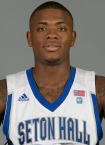
1. Fuquan Edwin — SG/SF, 6-6, 215
Senior, 22 years old
Season (29 mpg): 14.5 PPG, 3.8 RPG, 3 SPG, 1.7 APG
45% FG, 36% three-point, only 2.5 FTA
Game: 21 points, 5 rebounds, 2 steals
9-13 FG, 3-6 three-point
— 5.8% steal percentage (3rd nationally)
Outlook: Edwin’s strengths and weaknesses were (again) consistent with his earlier performances this season. He converted three 3-pointers in the first half, using a 6-6 frame and long wingspan to get clear looks. Edwin received the ball off screens, and regardless if he had separation from the defender, he enjoyed the advantage of elevating for an open look. Edwin moves well off the ball—constantly running off screens, cutting hard, and setting his feet for a catch and shoot attempt. He also runs the floor quickly in transition.
On the surface, Edwin has potential as a role-playing shooter and defender in the NBA. He has an awkward release on his shot (pictured), flinging the  ball above his head and kicking his right leg on the release. But the rhythm seems to work for him. Edwin isn’t an excellent shooter—he’s converting 40% of his jumpers and 36% of his 3′s—but he’s a shooter by nature, and is an efficient scorer overall.
All that said, Edwin will have to do more than just catch and shoot if he wants to sustain a career at the next level. Offensively, he needs to tighten his handle to create his own shot. He also needs to attack the basket more consistently. A 6-6 SG should be attempting more than 15% of his shots around the basket. When he gets into the paint, Edwin needs to finish through contact. He’s attempting more “runners” (17.6%) than shots around the basket (14.5%), which, frankly, is unacceptable. There’s no reason he should be settling for floaters at his size. Edwin’s size also gives him an edge on the boards, where pursues balls but isn’t as tenacious as you’d like.
Edwin has terrific anticipation skills on defense, using his length to accumulate 3 steals per game, and several more deflections. While his length will be negated to some degree at the next level, he should still be able to hold his own. He clogs passing lanes, and is a constant irritant. Special length for a wing player.
Edwin is Seton Hall’s focal point, as his 27% usage rating ranks 5th in the Big East. With less attention at the next level, Edwin will presumably get more on-one-on shots.
Going forward, he can further distinguish himself by attacking the basket instead of opting for mid-range jumpers and floaters.
Overall, I’m comfortable saying Edwin’s size, shooting, and two-way contributions warrant legitimate NBA consideration.
Strengths
— Great size and wingspan for position (6-6)
— Has potential to be a role-playing shooter; gets clear looks
— 63% of attempts are jumpers; shooting 40%
— Capable from 3 (36% on 4.5 attempts)
— Effective running off screens to catch and shoot/create misdirection
— converting 60% in transition; good athlete
— 3 steals per game; 5.8% steal percentage ranks 3rd nationally
— Long arms and quick feet give him terrific potential as defender
Defects/Areas of Improvement
— Unconventional shooting mechanics (almost like he’s flinging the ball; kicks leg forward on release)
— Shies away from contact (2.5 free-throws is unacceptable for a 6-6 SG)
— Too many runners (17.6%); needs to attack basket
— Loses control driving the lane (1.9 TO, only 1.7 APG)
— Needs to round out game
Video
Video: 21 points vs. Georgetown
Video: Misses vs. Georgetown (9-13 FG)
Video: Length (contesting perimeter shots)
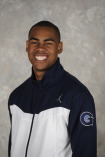
2. Markel Starks — SG, 6-3, 220
Senior, 23 years old
Season (37 mpg): 17 PPG, 3.9 APG, 2.2 RPG, 2.5 TO
41% FG, 31% three-point (5 attempts), 1.6 A/TO
Game: 13 points, 2 rebounds, 2 assists
4-8 FG, 0-3 three-point, 5-6 FT
Outlook: Markel Starks has gradually worked his way into an NBA prospect. He’s improved every year in college.
SR (37 mpg): 17 PPG, 3.9 APG, 2.2 RPG, 2.5 TO, 41%
JR (34 mpg): 13 PPG, 3 APG, 1.8 RPG, 2 TO, 46%
SO (24 mpg): 7 PPG, 1.6 APG, 1.6 RPG, 1.4 TO, 37% FG
FR (10 mpg): 1.5 PPG, 0.7 APG, 0.7 RPG, 0.6 TO, 28% FG
At 6-1 with terrific ball skills and a smooth jumper, Starks is a shooting guard stuck in a point guard’s body. His game is predicated on making plays with the ball in his hands. He’s equipped with a crafty handle to maneuver the court, and get the offense into its actions. His advanced handle allows him to score in a variety of ways — he can drive in isolation, create space for a jumper, or operate the pick and roll. This is reflected in his scoring distribution—24% spot up, 19% pick and roll, 15% transition, 13% isolation, 12% running off screens—as well as on film.
Playing within Georgetown’s (very) structured offense, Starks showcased a quick first step to sliver through openings and penetrate the lane. Once in the paint, he has perfected the “short jumper.” He can finish a tear-drop, or one-legged runner (a la Steve Nash). Part of the reason his in-between game is so polished is because he lacks vertical athleticism and explosion. Due to below average athleticism, Starks struggles to finish at the basket. He opts for double-pumps, reverses, and off-balance layups, often resulting in a miss. Still, all things considered, Starks is a crafty and capable scorer, albeit using 28% of the available shots in the process.
However, at 6-1 Starks is too small to play shooting guard in the NBA. He would presumably struggle to score over bigger/longer/stronger 2-guards, but more importantly, he wouldn’t be able to defend the SG position. If he were two inches taller, I’d vouch for him as a combo guard, similar to CJ McCollum, but he’s not. Thus, if Starks is going to make it, it will be as a point guard.
Starks is solid distributor within Georgetown’s offense. But from what I saw in person and on film, he lacks natural point guard instincts, in terms of crisply moving the ball, getting teammates in their spots, valuing each dribble, and just making plays. He uses so much time and energy to create his own shot that it minimizes other aspects of his game. To his credit, he’s leading the Hoyas with 3.9 assists per game, but he posts a pedestrian 23% assist rate (308th nationally). If Starks were three years younger, I’d say he has the time to drastically refine his offensive repertoire. But he’ll be 23 at Draft time, and lacking the passing/athleticism to be a PG, and the size to be a SG, I have difficulty seeing Starks earn minutes in the NBA.
Strengths
— Lethal ball handling to penetrate the lane and create offense
— Converts shots with defenders draped all over him
— Excellent “short jumpers” to finish over length (shooting 47% from 17-feet and in)
— Can operate pick and roll
— Capable of driving in either direction (47% of attempts going right, 53% left)
Defects/Areas of Improvement
— A scoring-oriented guard, but only 6-1
— Hasn’t shown the requisite ability—or potential—to run a team as a point guard
— Will struggle to defend shooting guards at 6-1
— Lacks vertical athleticism and explosion to finish in the paint
— Ball-stopper at times, mostly due to over-dribbling on perimeter
— Doesn’t stand out in any particular facet of the game
Video
Video: Recent Scoring (vs. Xavier, Seton Hall)
Video: Misses
Video: Drawing Fouls
— Averaging 4.7 free throws in 37 minutes per game. I don’t anticipate Starks being afforded these calls in the NBA.
Video: Assists
— Decent facilitator, but nothing remarkable.
Video: Off the Dribble Shooting
— Starks is shooting 37% off the dribble this season. On one hand, he wastes time with unnecessary dribbles. On the other, he can make difficult shots.
Video: “Short Jumpers’ (17-feet and in)
— Crafty handle to penetrate the lane. Polished floater and 17-foot jumper to finish over size.
— Capable driver with either hand.
Video: Driving Right (47% of isolation drives)
Video: Driving Left (53% of isolation drives)
Video: Missed 3-Pointers
— 31% on 5 attempts per game
Video: Isolation Defense (Poor)
— Starks lacks the lateral quickness to defend speedy guards. He also lacks the length/athleticism to compensate if he gets beat. Not a defensive liability, but certainly not an asset.
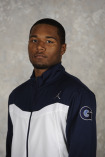
3. D’Vauntes Smith-Rivera — SG, 6-3, 220
Sophomore, 21 years old
(apostrophe in “D’Vauntes” does not display in tab header due to formatting glitch)
Season (35 mpg): 17 PPG, 4.5 RPG, 2.8 APG
45% FG (11.5 attempts), 40% three-point, 87% FT
Game: 20 points, 3 assists, 1 rebound
8-14 FG, 3-3 three-point
Outlook: A 2012 top-100 recruit out of Oak Hill Academy, Smith-Rivera is a 6-3 shooting guard with extraordinary strength for the position. Even at 6-3, he can get anywhere on the court due to a tight handle and 220-pound frame. He’s a combo guard offensively, capable of playing anywhere on the perimeter. Smooth off the dribble, or executing (passing, cutting through) Georgetown’s patient deliberate half court sets. Smith-Rivera leverages his strength on the boards, averaging 4.5 RPG, and as mentioned he can hit open guys in their spots. This lends credence to a high basketball IQ.
All that being said, Smith-Rivera isn’t a great athlete (vertically or length-wise). More importantly, though, he’s nearing the point where he can’t overpower the opponents. It’s one thing if your strength augments your on-court skills. It’s entirely different if, at 6-3, the foundation of your game is out-muscling the opponent. Smith-Rivera’s lack of size and quickness makes it incredibly arduous for him to execute his best skill — scoring the basketball.
Still, he’s only a sophomore, and he excels in the most essential set in basketball: the pick and roll. Smith-Rivera is scoring an effective .96 points per P-n-R attempt, where he uses crafty ball skills and a pure jumper. He reads screens very well, and attacks at the opportune moment. Smith-Rivera is capable from 3 (40%), but his size and lack of vertical athleticism hinder his ability to finish at the basket.
Smith-Rivera lacks a defensive identity as well. At 6-3 and lacking the requisite quickness to stay with NBA guards, I would anticipate him struggling to defend at the next level.
Strengths
— Strong guard to create space and get into the lane (“linebacker build”)
— Polished jump shot (41%, 1.03 PPP) and from mid-range (42%)
— Can shoot with his feet set (42%), or off the dribble (42%)
— Uses strong frame to rebound through traffic
Defects/Areas of Improvement
— Limited athleticism, short arms, expends a lot of energy trying to create space
— 75% of attempts are jump shots; only 20% around the basket (average finisher)
— Relies on strength to impact game; will only take him so far, especially as the competition matches his physical ability (already happening)
— Undefined position on both sides of the court
— Doesn’t specialize in any aspect; can’t see him cracking an NBA rotation at this point…
Video
Video: Recent Scoring
Video: Misses (8-14 FG)
Video: Pick and Roll scoring
— 16% of offense, posting .96 points per pick and roll attempt. Can dribble off the pick, or go away from it. Crafty and strong with the ball.
Video: Finishing Struggles
— Only 20% of attempts. Lack of size and athleticism apparent here.
Video: Shooting off the Dribble
— Fluid off the dribble. 39-93 on such attempts this season (42%)

4. Sterling Gibbs — PG, 6-1, 185
Sophomore (via Texas), 20 years old
Season (31 mpg): 14 PPG, 3.3 RPG, 4.4 APG
41% FG, 35% three-point, 8.1 FTA (75%)
30% assist rate (70th nationally), 92% FT rate (8th)
Game: 18 points, 7 assists, 2 steals
4-9 FG, 9-11 FT
*Gibbs was suspended the day after this game; Coach Kevin Willard cited “attitude problems.”
*He is the younger brother of former Pittsburgh guard Ashton Gibbs
Outlook: Gibbs again focused on attacking the basket, accumulating 11 free throws in 28 minutes. He was deliberate on the pick and roll, using either hand to penetrate and score, as well as dishing inside the paint.
But that said, Gibbs still struggled to create a flow within the offense. Seton Hall was often out of sync, in terms of moving the ball and playing in concert with one another, and Gibbs shoulders much of this responsibility. He needs to move the ball on the perimeter, not just try to drive and create. Developing a jump shot would help as well. Nearly 50% of his attempts are jump shots, but he’s only shooting 31%, and only 35% from 3-point.
Overall, Gibbs is an aggressive point guard who penetrates the lane to draw fouls and distribute down low. He needs to develop his jump shot, as well as his leadership and intangibles as a point guard. He sometimes has poor body language, and doesn’t engage his teammates.
If he becomes more efficient shooting the ball, and still maintains his impressive free throw rate, we can maybe revisit down the line. Playing alongside Isaiah Whitehead next season should give Gibbs plenty of one-on-one opportunities.
Strengths
— Aggressive and speedy guard who draws contact and accumulates free throws
— Solid pick and roll scorer (39% FG, .88 PPP, 70th percentile), burst through the lane
— 30% assist rate (70th nationally), 92% FT Rate (8th)
— Uses 30% of Seton Hall’s transition attempts; most effective drawing contact in open floor
Defects/Areas of Improvement
— So-so defender
— Inconsistent jump shot
— Not a great leader at the PG position
— Diminutive (6-1)
— Good assist numbers, but he is Seton Hall’s primary—and in some cases, only—capable ball handler
— Aggressive attacking the rim, but lacks shooting and quickness to become a reliable playmaker.
Video
Video: 18 points vs. Georgetown
Video: Misses (4-9)
Video: 7 assists
— Fast in transition.
Video: Pick and Roll Scoring
— Gets into lane, can drive both ways. Draws contact.
Video: Pick and Roll Passing (to screener)
— Good recognition and timing to get the screener the ball.
Video: Drawing Fouls
— 8.1 FTA, 92% Free Throw rate (8th nationally).

5. Jabril Trawick — F/G, 6-5, 215
Junior, age unknown (~18/19)
Season (24 mpg): 8 PPG, 3 RPG, 1.5 APG
53% FG, 70% FT
Game: 11 points, 6 rebounds
4-10 FG, 1-2 three-point
Outlook: Trawick hasn’t developed the way many expected he would coming out of high school, when he was a top-100 recruit.
The good: Trawick is a high energy, active presence, who contributes with points around the basket and also slashing to the hoop.
The bad: Trawick’s jump shot never came along, relegating him to the interior. His versatility and constant movement in Georgetown’s offense makes it feasible in college, but obviously, a 6-5 forward won’t survive in the NBA.
At only 6-5, his shot distribution is as follows: 58% around the basket, 5% post up, 2% runners, and 35% jump shots. This would be acceptable if Trawick set up on the perimeter and then drove the ball, but he literally sets up in the interior.
He’s shooting 30% on jump shots this season, including 9-30 from three-point range. For Trawick, the next steps would be to develop his ball handling and jump shot, to be a legitimate threat on the perimeter. Then, he could use his finishing ability as a supplemental skill, not the focal point of his game. A lot of work to be done here.
Video
Video: Recent scoring (Xavier, Seton Hall)
— Physical, runs the floor well. But only 6-5.
Video: 3-Point Attempts this season (9-30)
— Poor shooting form.
Video: Cutting/Slashing
— 17% of attempts are cuts to the hoop. Converting 77%. Great job sealing his man, and finishing through contact. Can compensate for lack of athleticism with forward momentum and good position down low.
Video: Isolation defense (stays upright, slow feet).
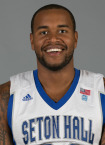
6. Eugene Teague — C, 6-9, 270
Senior (via Southern Illinois), 24 years old
Season (26 mpg): 10 PPG, 7.7 RPG, 1 APG
61% FG, 63% FT
15% offensive rebounding percentage (17th nationally), 22.7% defensive rebounding percentage (83rd)
Game: 12 points, 7 rebounds
3-5 FFG, 6-8 FT
Outlook: Teague is Seton Hall’s primary interior player, accounting for nearly 60% of the team’s “post up” attempts. He has a “wide trunk” to establish position, and finishes within 10 feet of the basket. He’s also naturally physical, which helps him accumulate rebounds and finish through contact. He can impose his strength on smaller players.
But he’s only 6-9, is slow on his feet, and doesn’t possess any semblance of a jump shot. 99% of Teague’s attempts are “in the paint,” and although he’s converting 59% on such shots, his game is limited to hook shots around the basket. A 6-9 center with no range or leaping ability, I don’t see Teague contributing at the next level. Plus, he’s already 24 years old.
Video
Video: Scoring (recent)
— Muscled his way, soft touch.
Video: Offensive Rebounding (crashing boards)
— Doesn’t dunk the ball enough. Lacks vertical athleticism. Good crashing boards, though.
Video: Around the Basket Scoring
— Strong in the post, can score in immediate vicinity of basket.

7. Patrik Auda — F, 6-9, 235
Junior, 24 years old
Season (24 mpg): 9 PPG, 4.6 RPG, 1.2 APG
55% FG, 29% three-point
Game: 8 points, 6 rebounds, 3 assists
4-7 FG , 0-2 three-point
Outlook: Auda is a 6-9 forward, whose only real offensive move is putting his head down and driving with his left hand. He can set up anywhere inside the arc, finishing a number of angles and drop-offs each game. He can occasionally knock down a face-up jump shot, from 3-point or mid-range.
Auda’s shot distribution this season is as follows: 22% jump shots, 53% around the basket, and 22% post up. Of his 21 jump shot attempts this season, 17 are “pick and pops.”Auda sets hard screens, and is a dual-threat to roll or pop.
All things considered, Auda is a versatile weapon for Seton Hall. He can pop for a short jumper, or attack with his left hand. But at 6-9, he lacks the handle to play on the wing, and the athleticism/skill to compete down low. He’s already 24 years old, and doesn’t excel in any aspect of the game.
Lastly, he’s been injury-prone throughout college. He was sidelined all last season with a broken right foot, and missed six games this season after re-injuring it.
Video
Video: Scoring (recent)
Video: Around the Basket Scoring
— Plays with a lot of energy.
Video: 21 Post Up Attempts
— Favors left hand.
Down the Line…
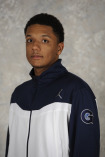
*Reggie Cameron — SF, 6-7, 225
Freshman, 19 years old
Season (14 mpg): 4 PPG, 1.5 RPG, 1 APG
Game: 5 points
2-5 FG
Outlook: Cameron was a top-100 recruit coming out of high school, but it was obvious he’d require development before earning consistent minutes.
A 6-7 small forward, he’s a pure shooter with range beyond the 3-point line. His build is “smooth” and “rotund,” rather than powerful and athletic.
This would be OK if Cameron had the footwork and agility to create his own shot. However, he doesn’t. Cameron is heavy on his feet, which hinders his jumping and running ability. Rising for a jump shot is an arduous process at this point.
Right now, Cameron is merely a spot-up shooter on offense. He struggles to maintain control of the basketball, let alone create off the dribble. He needs to develop his ball skills, and eventually become lighter on his feet. He will be asked to defend small forwards, but at this point I’m not sure if he has the quickness to do so.
If he manages to get quicker, his shooting prowess will become a focal point in Georgetown’s offense, because he can run off screens or find pockets to rise for a quick jumper. But there’s work to be done.
Video
Video: Spot-Up Misses
— Heavy feet. Needs to get lighter, and develop a sense of urgency.
Video: Shooting
— 81% of attempts are jumpers. Smooth release, was a terrific shooter in high school.
Video: Length (contesting shots on defense)
— Good length and close-out speed. Holding opponents to stellar 5-32 on jumpers this season.
Video: Around the Basket attempts (12 attempts on season)
Video: Shooting off screens
— Is he quick enough to run around screens? Not sure. Smooth pull up, though.
NBA Prospects
1. Fuquan Edwin (SR, Seton Hall): SG/SF, 6-6, 215
2. Markel Starks (SR, Georgetown): SG, 6-3, 220
3. D’Vauntes Smith-Rivera (SO, Georgetown): SG, 6-3, 220
4. Sterling Gibbs (SO, Seton Hall): PG, 6-1, 185
Next Tier
5. Jabril Trawick (JR, Georgetown): F, 6-5, 210
6. Eugene Teague (SR, Seton Hall): C, 6-9, 270
7. Patrik Auda (SR, Seton Hall): C, 6-9, 270
Down the Line…
*Reggie Cameron (FR, Georgetown): SF, 6-7, 225
–
NBA Prospects
1. Fuquan Edwin — SG/SF, 6-6, 215
Senior, 22 years old
Season (29 mpg): 14.5 PPG, 3.8 RPG, 3 SPG, 1.7 APG
45% FG, 36% three-point, only 2.5 FTA
Game: 21 points, 5 rebounds, 2 steals
9-13 FG, 3-6 three-point
— 5.8% steal percentage (3rd nationally)
Outlook: Edwin’s strengths and weaknesses were (again) consistent with his earlier performances this season. He converted three 3-pointers in the first half, using a 6-6 frame and long wingspan to get clear looks. Edwin received the ball off screens, and regardless if he had separation from the defender, he enjoyed the advantage of elevating for an open look. Edwin moves well off the ball—constantly running off screens, cutting hard, and setting his feet for a catch and shoot attempt. He also runs the floor quickly in transition.
On the surface, Edwin has potential as a role-playing shooter and defender in the NBA. He has an awkward release on his shot (pictured), flinging the ball above his head and kicking his right leg on the release. But the rhythm seems to work for him. Edwin isn’t an excellent shooter—he’s converting 40% of his jumpers and 36% of his 3′s—but he’s a shooter by nature, and is an efficient scorer overall.
All that said, Edwin will have to do more than just catch and shoot if he wants to sustain a career at the next level. Offensively, he needs to tighten his handle to create his own shot. He also needs to attack the basket more consistently. A 6-6 SG should be attempting more than 15% of his shots around the basket. When he gets into the paint, Edwin needs to finish through contact. He’s attempting more “runners” (17.6%) than shots around the basket (14.5%), which, frankly, is unacceptable. There’s no reason he should be settling for floaters at his size. Edwin’s size also gives him an edge on the boards, where pursues balls but isn’t as tenacious as you’d like.
Edwin has terrific anticipation skills on defense, using his length to accumulate 3 steals per game, and several more deflections. While his length will be negated to some degree at the next level, he should still be able to hold his own. He clogs passing lanes, and is a constant irritant. Special length for a wing player.
Edwin is Seton Hall’s focal point, as his 27% usage rating ranks 5th in the Big East. With less attention at the next level, Edwin will presumably get more on-one-on shots.
Going forward, he can further distinguish himself by attacking the basket instead of opting for mid-range jumpers and floaters.
Overall, I’m comfortable saying Edwin’s size, shooting, and two-way contributions warrant legitimate NBA consideration.
Strengths
— Great size and wingspan for position (6-6)
— Has potential to be a role-playing shooter; gets clear looks
— 63% of attempts are jumpers; shooting 40%
— Capable from 3 (36% on 4.5 attempts)
— Effective running off screens to catch and shoot/create misdirection
— converting 60% in transition; good athlete
— 3 steals per game; 5.8% steal percentage ranks 3rd nationally
— Long arms and quick feet give him terrific potential as defender
Defects/Areas of Improvement
— Unconventional shooting mechanics (almost like he’s flinging the ball; kicks leg forward on release)
— Shies away from contact (2.5 free-throws is unacceptable for a 6-6 SG)
— Too many runners (17.6%); needs to attack basket
— Loses control driving the lane (1.9 TO, only 1.7 APG)
— Needs to round out game
Video
Video: 21 points vs. Georgetown
Video: Misses vs. Georgetown (9-13 FG)
Video: Length (contesting perimeter shots)
2. Markel Starks — SG, 6-3, 220
Senior, 23 years old
Season (37 mpg): 17 PPG, 3.9 APG, 2.2 RPG, 2.5 TO
41% FG, 31% three-point (5 attempts), 1.6 A/TO
Game: 13 points, 2 rebounds, 2 assists
4-8 FG, 0-3 three-point, 5-6 FT
Outlook: Markel Starks has gradually worked his way into an NBA prospect. He’s improved every year in college.
SR (37 mpg): 17 PPG, 3.9 APG, 2.2 RPG, 2.5 TO, 41%
JR (34 mpg): 13 PPG, 3 APG, 1.8 RPG, 2 TO, 46%
SO (24 mpg): 7 PPG, 1.6 APG, 1.6 RPG, 1.4 TO, 37% FG
FR (10 mpg): 1.5 PPG, 0.7 APG, 0.7 RPG, 0.6 TO, 28% FG
At 6-1 with terrific ball skills and a smooth jumper, Starks is a shooting guard stuck in a point guard’s body. His game is predicated on making plays with the ball in his hands. He’s equipped with a crafty handle to maneuver the court, and get the offense into its actions. His advanced handle allows him to score in a variety of ways — he can drive in isolation, create space for a jumper, or operate the pick and roll. This is reflected in his scoring distribution—24% spot up, 19% pick and roll, 15% transition, 13% isolation, 12% running off screens—as well as on film.
Playing within Georgetown’s (very) structured offense, Starks showcased a quick first step to sliver through openings and penetrate the lane. Once in the paint, he has perfected the “short jumper.” He can finish a tear-drop, or one-legged runner (a la Steve Nash). Part of the reason his in-between game is so polished is because he lacks vertical athleticism and explosion. Due to below average athleticism, Starks struggles to finish at the basket. He opts for double-pumps, reverses, and off-balance layups, often resulting in a miss. Still, all things considered, Starks is a crafty and capable scorer, albeit using 28% of the available shots in the process.
However, at 6-1 Starks is too small to play shooting guard in the NBA. He would presumably struggle to score over bigger/longer/stronger 2-guards, but more importantly, he wouldn’t be able to defend the SG position. If he were two inches taller, I’d vouch for him as a combo guard, similar to CJ McCollum, but he’s not. Thus, if Starks is going to make it, it will be as a point guard.
Starks is solid distributor within Georgetown’s offense. But from what I saw in person and on film, he lacks natural point guard instincts, in terms of crisply moving the ball, getting teammates in their spots, valuing each dribble, and just making plays. He uses so much time and energy to create his own shot that it minimizes other aspects of his game. To his credit, he’s leading the Hoyas with 3.9 assists per game, but he posts a pedestrian 23% assist rate (308th nationally). If Starks were three years younger, I’d say he has the time to drastically refine his offensive repertoire. But he’ll be 23 at Draft time, and lacking the passing/athleticism to be a PG, and the size to be a SG, I have difficulty seeing Starks earn minutes in the NBA.
Strengths
— Lethal ball handling to penetrate the lane and create offense
— Converts shots with defenders draped all over him
— Excellent “short jumpers” to finish over length (shooting 47% from 17-feet and in)
— Can operate pick and roll
— Capable of driving in either direction (47% of attempts going right, 53% left)
Defects/Areas of Improvement
— A scoring-oriented guard, but only 6-1
— Hasn’t shown the requisite ability—or potential—to run a team as a point guard
— Will struggle to defend shooting guards at 6-1
— Lacks vertical athleticism and explosion to finish in the paint
— Ball-stopper at times, mostly due to over-dribbling on perimeter
— Doesn’t stand out in any particular facet of the game
Video
Video: Recent Scoring (vs. Xavier, Seton Hall)
Video: Misses
Video: Drawing Fouls
— Averaging 4.7 free throws in 37 minutes per game. I don’t anticipate Starks being afforded these calls in the NBA.
Video: Assists
— Decent facilitator, but nothing remarkable.
Video: Off the Dribble Shooting
— Starks is shooting 37% off the dribble this season. On one hand, he wastes time with unnecessary dribbles. On the other, he can make difficult shots.
Video: “Short Jumpers’ (17-feet and in)
— Crafty handle to penetrate the lane. Polished floater and 17-foot jumper to finish over size.
— Capable driver with either hand.
Video: Driving Right (47% of isolation drives)
Video: Driving Left (53% of isolation drives)
Video: Missed 3-Pointers
— 31% on 5 attempts per game
Video: Isolation Defense (Poor)
— Starks lacks the lateral quickness to defend speedy guards. He also lacks the length/athleticism to compensate if he gets beat. Not a defensive liability, but certainly not an asset.
3. D’Vauntes Smith-Rivera — SG, 6-3, 220
Sophomore, 21 years old
Season (35 mpg): 17 PPG, 4.5 RPG, 2.8 APG
45% FG (11.5 attempts), 40% three-point, 87% FT
Game: 20 points, 3 assists, 1 rebound
8-14 FG, 3-3 three-point
Outlook: A 2012 top-100 recruit out of Oak Hill Academy, Smith-Rivera is a 6-3 shooting guard with extraordinary strength for the position. Even at 6-3, he can get anywhere on the court due to a tight handle and 220-pound frame. He’s a combo guard offensively, capable of playing anywhere on the perimeter. Smooth off the dribble, or executing (passing, cutting through) Georgetown’s patient deliberate half court sets. Smith-Rivera leverages his strength on the boards, averaging 4.5 RPG, and as mentioned he can hit open guys in their spots. This lends credence to a high basketball IQ.
All that being said, Smith-Rivera isn’t a great athlete (vertically or length-wise). More importantly, though, he’s nearing the point where he can’t overpower the opponents. It’s one thing if youre strength augments your on-court skills. It’s entirely different if, at 6-3, the foundation of your game is out-muscling the opponent. Smith-Rivera’s lack of size and quickness makes it incredibly arduous for him to execute his best skill — scoring the basketball.
Still, he’s only a sophomore, and he excels in the most essential set in basketball: the pick and roll. Smith-Rivera is scoring an effective .96 points per P-n-R attempt, where he uses crafty ball skills and a pure jumper. He reads screens very well, and attacks at the opportune moment. Smith-Rivera is capable from 3 (40%), but his size and lack of vertical athleticism hinder his ability to finish at the basket.
Smith-Rivera lacks a defensive identity as well. At 6-3 and lacking the requisite quickness to stay with NBA guards, I would anticipate him struggling to defend at the next level.
Strengths
— Strong guard to create space and get into the lane (“linebacker build”)
— Polished jump shot (41%, 1.03 PPP) and from mid-range (42%)
— Can shoot with his feet set (42%), or off the dribble (42%)
— Uses strong frame to rebound through traffic
Defects/Areas of Improvement
— Limited athleticism, short arms, expends a lot of energy trying to create space
— 75% of attempts are jump shots; only 20% around the basket (average finisher)
— Relies on strength to impact game; will only take him so far, especially as the competition matches his physical ability (already happening)
— Undefined position on both sides of the court
— Doesn’t specialize in any aspect; can’t see him cracking an NBA rotation at this point…
Video
Video: Recent Scoring
Video: Misses (8-14 FG)
Video: Pick and Roll scoring
— 16% of offense, posting .96 points per pick and roll attempt. Can dribble off the pick, or go away from it. Crafty and strong with the ball.
Video: Finishing Struggles
— Only 20% of attempts. Lack of size and athleticism apparent here.
Video: Shooting off the Dribble
— Fluid off the dribble. 39-93 on such attempts this season (42%)
4. Sterling Gibbs — PG, 6-1, 185
Sophomore (via Texas), 20 years old
Season (31 mpg): 14 PPG, 3.3 RPG, 4.4 APG
41% FG, 35% three-point, 8.1 FTA (75%)
30% assist rate (70th nationally), 92% FT rate (8th)
Game: 18 points, 7 assists, 2 steals
4-9 FG, 9-11 FT
*Gibbs was suspended the day after this game; Coach Kevin Willard cited “attitude problems.”
*He is the younger brother of former Pittsburgh guard Ashton Gibbs
Outlook: Gibbs again focused on attacking the basket, accumulating 11 free throws in 28 minutes. He was deliberate on the pick and roll, using either hand to penetrate and score, as well as dishing inside the paint.
But that said, Gibbs still struggled to create a flow within the offense. Seton Hall was often out of sync, in terms of moving the ball and playing in concert with one another, and Gibbs shoulders much of this responsibility. He needs to move the ball on the perimeter, not just try to drive and create. Developing a jump shot would help as well. Nearly 50% of his attempts are jump shots, but he’s only shooting 31%, and only 35% from 3-point.
Overall, Gibbs is an aggressive point guard who penetrates the lane to draw fouls and distribute down low. He needs to develop his jump shot, as well as his leadership and intangibles as a point guard. He sometimes has poor body language, and doesn’t engage his teammates.
If he becomes more efficient shooting the ball, and still maintains his impressive free throw rate, we can maybe revisit down the line. Playing alongside Isaiah Whitehead next season should give Gibbs plenty of one-on-one opportunities.
Strengths
— Aggressive and speedy guard who draws contact and accumulates free throws
— Solid pick and roll scorer (39% FG, .88 PPP, 70th percentile), burst through the lane
— 30% assist rate (70th nationally), 92% FT Rate (8th)
— Uses 30% of Seton Hall’s transition attempts; most effective drawing contact in open floor
Defects/Areas of Improvement
— So-so defender
— Inconsistent jump shot
— Not a great leader at the PG position
— Diminutive (6-1)
— Good assist numbers, but he is Seton Hall’s primary—and in some cases, only—capable ball handler
— Aggressive attacking the rim, but lacks shooting and quickness to become a reliable playmaker.
Video
Video: 18 points vs. Georgetown
Video: Misses (4-9)
Video: 7 assists
— Fast in transition.
Video: Pick and Roll Scoring
— Gets into lane, can drive both ways. Draws contact.
Video: Pick and Roll Passing (to screener)
— Good recognition and timing to get the screener the ball.
Video: Drawing Fouls
— 8.1 FTA, 92% Free Throw rate (8th nationally).
Next Tier
5. Jabril Trawick — F/G, 6-5, 215
Junior, age unknown (~18/19)
Season (24 mpg): 8 PPG, 3 RPG, 1.5 APG
53% FG, 70% FT
Game: 11 points, 6 rebounds
4-10 FG, 1-2 three-point
Outlook: Trawick hasn’t developed the way many expected he would coming out of high school, when he was a top-100 recruit.
The good: Trawick is a high energy, active presence, who contributes with points around the basket and also slashing to the hoop.
The bad: Trawick’s jump shot never came along, relegating him to the interior. His versatility and constant movement in Georgetown’s offense makes it feasible in college, but obviously, a 6-5 forward won’t survive in the NBA.
At only 6-5, his shot distribution is as follows: 58% around the basket, 5% post up, 2% runners, and 35% jump shots. This would be acceptable if Trawick set up on the perimeter and then drove the ball, but he literally sets up in the interior.
He’s shooting 30% on jump shots this season, including 9-30 from three-point range. For Trawick, the next steps would be to develop his ball handling and jump shot, to be a legitimate threat on the perimeter. Then, he could use his finishing ability as a supplemental skill, not the focal point of his game. A lot of work to be done here.
Video
Video: Recent scoring (Xavier, Seton Hall)
— Physical, runs the floor well. But only 6-5.
Video: 3-Point Attempts this season (9-30)
— Poor shooting form.
Video: Cutting/Slashing
— 17% of attempts are cuts to the hoop. Converting 77%. Great job sealing his man, and finishing through contact. Can compensate for lack of athleticism with forward momentum and good position down low.
Video: Isolation defense (stays upright, slow feet).
6. Eugene Teague — C, 6-9, 270
Senior (via Southern Illinois), 24 years old
Season (26 mpg): 10 PPG, 7.7 RPG, 1 APG
61% FG, 63% FT
15% offensive rebounding percentage (17th nationally), 22.7% defensive rebounding percentage (83rd)
Game: 12 points, 7 rebounds
3-5 FFG, 6-8 FT
Outlook: Teague is Seton Hall’s primary interior player, accounting for nearly 60% of the team’s “post up” attempts. He has a “wide trunk” to establish position, and finishes within 10 feet of the basket. He’s also naturally physical, which helps him accumulate rebounds and finish through contact. He can impose his strength on smaller players.
But he’s only 6-9, is slow on his feet, and doesn’t possess any semblance of a jump shot. 99% of Teague’s attempts are “in the paint,” and although he’s converting 59% on such shots, his game is limited to hook shots around the basket. A 6-9 center with no range or leaping ability, I don’t see Teague contributing at the next level. Plus, he’s already 24 years old.
Video
Video: Scoring (recent)
— Muscled his way, soft touch.
Video: Offensive Rebounding (crashing boards)
— Doesn’t dunk the ball enough. Lacks vertical athleticism. Good crashing boards, though.
Video: Around the Basket Scoring
— Strong in the post, can score in immediate vicinity of basket.
7. Patrik Auda — F, 6-9, 235
Junior, 24 years old
Season (24 mpg): 9 PPG, 4.6 RPG, 1.2 APG
55% FG, 29% three-point
Game: 8 points, 6 rebounds, 3 assists
4-7 FG , 0-2 three-point
Outlook: Auda is a 6-9 forward, whose only real offensive move is putting his head down and driving with his left hand. He can set up anywhere inside the arc, finishing a number of angles and drop-offs each game. He can occasionally knock down a face-up jump shot, from 3-point or mid-range.
Auda’s shot distribution this season is as follows: 22% jump shots, 53% around the basket, and 22% post up. Of his 21 jump shot attempts this season, 17 are “pick and pops.”Auda sets hard screens, and is a dual-threat to roll or pop.
All things considered, Auda is a versatile weapon for Seton Hall. He can pop for a short jumper, or attack with his left hand. But at 6-9, he lacks the handle to play on the wing, and the athleticism/skill to compete down low. He’s already 24 years old, and doesn’t excel in any aspect of the game.
Lastly, he’s been injury-prone throughout college. He was sidelined all last season with a broken right foot, and missed six games this season after re-injuring it.
Video
Video: Scoring (recent)
Video: Around the Basket Scoring
— Plays with a lot of energy.
Video: 21 Post Up Attempts
— Favors left hand.
Down the Line…
*Reggie Cameron — SF, 6-7, 225
Freshman, 19 years old
Season (14 mpg): 4 PPG, 1.5 RPG, 1 APG
Game: 5 points
2-5 FG
Outlook: Cameron was a top-100 recruit coming out of high school, but it was obvious he’d require development before earning consistent minutes.
A 6-7 small forward, he’s a pure shooter with range beyond the 3-point line. His build is “smooth” and “rotund,” rather than powerful and athletic.
This would be OK if Cameron had the footwork and agility to create his own shot. However, he doesn’t. Cameron is heavy on his feet, which hinders his jumping and running ability. Rising for a jump shot is an arduous process at this point.
Right now, Cameron is merely a spot-up shooter on offense. He struggles to maintain control of the basketball, let alone create off the dribble. He needs to develop his ball skills, and eventually become lighter on his feet. He will be asked to defend small forwards, but at this point I’m not sure if he has the quickness to do so.
If he manages to get quicker, his shooting prowess will become a focal point in Georgetown’s offense, because he can run off screens or find pockets to rise for a quick jumper. But there’s work to be done.
Video
Video: Spot-Up Misses
— Heavy feet. Needs to get lighter, and develop a sense of urgency.
Video: Shooting
— 81% of attempts are jumpers. Smooth release, was a terrific shooter in high school.
Video: Length (contesting shots on defense)
— Good length and close-out speed. Holding opponents to stellar 5-32 on jumpers this season.
Video: Around the Basket attempts (12 attempts on season)
Video: Shooting off screens
— Is he quick enough to run around screens? Not sure. Smooth pull up, though.