Towson 83, Hofstra 77
Saturday, February 22, 2014 | 4 p.m. ET | Mack Sports Complex (Hempstead, NY)
Towson 20-9, Hofstra 8-21
Recap: Senior forward Jerrelle Benimon scored 22 points in 26 minutes to lead Towson to an 83-77 road victory at Hofstra. Rafriel Guthrie and Mike Burwell scored 16 and 15, respectively, as Towson accumulated 41 free throw attempts (compared to Hofstra’s 21). For Hofstra, guard Zeke Upshaw scored a game-high 33 points, and Moussa Kone contributed 8 points, 12 rebounds, and 6 blocks. Hofstra has now lost 10 of its last 11 games, while Towson has won 7 of 8.
*Ages calculated at time of 2014 Draft
* If the videos do not appear, please “refresh” the webpage once.
- NBA PROSPECTS
- JERRELLE BENIMON
- MOUSSA KONE
- ZEKE UPSHAW
- MARCUS DAMAS
- DION NESMITH
- MIKE BURWELL
- VIEW AS SINGLE PAGE
NBA Prospects
1. Jerrelle Benimon (SR, Towson): SF/PF, 6-8, 250
Next Tier
2. Moussa Kone (JR, Hofstra): PF/C, 6-7, 220
3. Zeke Upshaw (SR, Hofstra): SG/SF, 6-6, 215
Important to Their Team, But Not NBA Caliber
4. Marcus Damas (SR, Towson): SF, 6-7, 215
5. Dion Nesmith (SR, Hofstra): PG, 6-0, 200
6. Mike Burwell (SR, Towson): G, 6-5, 205
NBA Prospects
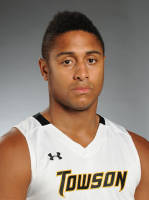
#20 Jerrelle Benimon — SF/PF, 6-8, 250
Senior, 22 years old (via Georgetown)
Season (35.6 mpg): 18.6 PPG, 11.4 RPG, 4 APG, 1.3 BPG
53% FG, 29% three-point, 72% FT
27.5 PER, 3 fouls per game
Using 29.4% of Towson’s possessions (65th nationally)
Game (26 min): 22 pts, 6 rbs, 1 ast, 4 fouls
7-10 FG, 1-1 three-point, 7-9FT
Outlook: For me, Benimon is a difficult prospect to evaluate.
He is the best player in the CAA, a lock to repeat as Conference Player of the Year, and he contributes across the board.
However, Benimon will be a role player should he make the NBA. Thus, it’s difficult to identify which aspects of his game will successfully translate to the next level.
The good: At 6-8, 250-pounds, Benimon is a combo-forward with a vast scoring arsenal. Offensively, he can face up or play with his back to the basket. Defensively, he can defend either forward position.
Benimon is balanced offensively—his shot distribution this season is 34% jump shots/46% around the basket/16% post up/4% runner. Quick first step to attack off the bounce, and a strong upper body to drive powerfully. When his jump shot and inside game are in sync, he is unstoppable inside the 3-point line. Off the ball, Benimon is adept at finding the open seams in the defense, leading to cuts and drop offs at the basket. He has the size and footwork to score from inside 17-feet.
Benimon is pretty much unguardable in the CAA. He scored 17 points on 6-7 shooting in the first half vs. Hofstra, a typical performance by his standards. He can pick and pop on the perimeter, and finish in the paint. “Give the ball to Jerrelle and let him operate” is Towson’s most frequent set this season.
Benimon is positionally interchangeable in the half court. He also has the requisite ball handling skills to lead—and finish—in transition.
Defensively, Benimon is a good perimeter defender, holding opponents to 20% shooting on jumpers. Disciplined and patient footwork, and great timing on his contests. He absorbs contact with his 245-pound frame, and has the motor to defend for 40 minutes.
Benimon is also a terrific rebounder, and passer from the high post. He averages 11.4 RPG, and his 25% defensive rebounding percentage ranks 28th nationally. His wide build, desire to rebound, and vertical athleticism from a stationary position enable him to rebound through traffic. Benimon wants to rebound, from both the perimeter and the paint, with a clear second-and-third effort on film.
Passing-wise, Benimon is averaging 3.7 assists per game, and his 27.8% assist rate ranks 6th in the CAA. He had only 1 assist vs. Hofstra, but on film, he has terrific vision from the foul line area. When the defense converges for a double team in the post, Benimon can pass out of traps, with cross-court accuracy. He hits open cutters, and can pass while in motion. Good stuff here.
The bad: All that being said, Benimon’s production and impact must be contextualized. He plays in the CAA, a below-average league by any measure. Towson’s offense is specifically designed to get Benimon touches. He is the main cog in Towson’s attack; not an ancillary piece like he’d be in the NBA. Again, does he excel in any facet of the game to become a solid role player?
To his credit, Benimon has taken care of business. And to even more credit, he’s played well in the non-conference (21 points and 10 rebounds at Kansas; 11 points and 6 rebounds at Villanova; 32 points and 10 rebounds vs. Temple). At Allen Fieldhouse in November, Benimon consistently scored over Joel Embiid, using pump-fakes, counter-moves and fade-away jumpers. It was a tedious approach, but it worked, and lent credence to his soft touch.
But for all the skill Benimon possesses—versatility scoring the ball, good rebounder and passer—I still have reservations. Firstly, although he shoots 53% FG/59% true shooting percentage, Benimon needs touches to be effective. 27% of his offense is isolation, while 13% is post-up situations. He’s been molded as the centerpiece scorer, not a role player. What could he bring beyond scoring? Any specific contributions without the basketball?
Secondly, Benimon lacks the size (6-8, short arms) and athleticism to be an interior force in the NBA. Against Kansas, he had to scratch and claw for everything in the paint. Such an arduous approach is not sustainable over 82 games.
Thirdly, Benimon uses a lot of dribbles to create separation. He won’t be afforded a 35-second clock in the NBA, and again, he’ll be playing within the framework of an actual offense.
Without proper size and athleticism, and at 22 years old, can Benimon extended his range beyond 17-feet? These are not rhetorical questions; I’m legitimately curious.
Maybe he can contribute as a catch-and-shoot stretch forward. But as of now, I doubt that. Per Synergy, of his 100 jump shot attempts this season, only 8 have been catch and shoot, while 54 have come off the dribble. Additionally, his range is very limited, shooting 29% from 3-point range this season.
In summary, I think Benimon will struggle at the next level due to average athleticism, tendency to over-dribble, and limited range. If he can extend his range, he’ll have solid pick and pop potential, which could stretch the defense and open up driving lanes. But developing a jump shot is easier said than done.
I have concerns defensively as well. While statistics measure Benimon as an “excellent” isolation defender, I disagree. Firstly, he has short arms, which makes defending the post very difficult. But more importantly, watching on film, Benimon clearly struggles to contain perimeter penetration. He stays upright in his stance, and is slow on his feet. Opposing players routinely drive by Benimon and penetrate the lane, regardless if they finish the basket.
So yes, Benimon is a solid defender in terms of timing and contesting shots. But he has poor footwork, which leads to porous—if not terrible—defense.
Overall: Benimon’s versatile scoring and aggressiveness on the glass make him a valuable prospect. An improved jumper will open up driving lanes, and maximize his near perfect touch around the basket. Most importantly, though, he needs to improve his on-ball defense. If he measures good enough at the combine, his offensive talent warrants second-round Draft consideration.
Strengths
— Combo-forward with vast scoring arsenal
— Aggressive and gracious to finish on the block; pure jumper to 17-feet
— Top-30 defensive rebounding percentage
— Second-leading passer in CAA (can pass from high post, spot cutters, or pass out of traps)
— Terrific pick and pop potential
— A scorer by nature (has produced consistently all year long)
Defects/Areas of Improvement
— Short wingspan
— Limited height and athleticism; needs to extend game to perimeter
— Poor 3-point shooter (29%)
— Clearly struggles going left
— Struggles containing penetration
— Lacks athleticism and size to defend post players at the next level
— Potentially “position-less” on both ends of the court (lacks handle/jumper to play SF in the NBA; lacks footwork to defend SFs, size to defend PFs)
Video
Strengths
Video: 22 Points vs. Hofstra
Video: Non-conference scoring (21 points vs. Kansas; 11 points vs. Villanova; 32 vs. Temple)
Video: Put-Backs
— 11% of Benimon’s attempts this season are on offensive put-backs, where he’s converting 66% of his attempts. Relentless second effort
Video: Mid-Range Shots
— Benimon is a reliable mid-range shooter (38%), but sometimes he over-dribbles. He has good form on his shot, releasing the ball at its apex
Video: “Post Up” Points
— Benimon is a crafty scorer in the paint, with a strong frame to back down his opponent. Clearly favors shooting over his right shoulder
Video: Isolation defense (excellent)
— 15% of his possessions defensively, holding opponents to 11% shooting
— Good patience and balance; keeps hands in offensive player’s grill; good timing on contest. That said, I still have concerns…
Video: Cutting/Slashing
— Nimble feet. Finds creases off the ball, and has requisite touch/strength to finish below the foul line
Video: Pick and Pop
— Small sample (11-18 on the season), but Benimon has pick and pop potential
— Very effective driving to the basket off the “pop”
Video: Handling the Ball in transition
— Has a “watch out, coming through traffic!” effect in the open court. Tight handle to go coast to coast
Video: Passing/Court Vision
— 3.7 APG; 27.8% assist rate ranks 6th in the CAA; second in the CAA in total assists
— Can pass from high post; keeps the ball high and surveys the defense
Video: Deceptive athleticism
— Benimon is not a “high flyer,” but he’s flashed explosive ability in fits and starts
Defects/Areas of Improvement
Video: Misses
Video: Struggles driving left
— Benimon is clearly uncomfortable going left
— 5-25 driving left this season; comparatively, he’s 23-46 driving right
Video: Missed 3′s
— As mentioned, Benimon is shooting 29% from 3 (9-31 on the year). Limited range
Video: Fouling
— 3 fouls per game (36 min)
— “Bites” on shot-fakes
Video: Protecting the middle of the court
— Poor footwork, struggles to contain penetration
— Lunges for steals; gambles
— Major concern here
Next Tier

#31 Moussa Kone — PF/C, 6-7, 220
Junior, age unknown to me
Season (21 mpg): 7 PPG, 5.8 RPG, 1.1 BPG
54% FG, 17.7 PER
Game: 8 pts, 12 rbs, 6 blks
4-8 FG
*Midway through his freshman season, Kone discovered he was legally blind in his right eye. He is literally playing with one functioning eye. Impressive and commendable, to say the least.
Outlook: A 6-7 power forward, Kone was the most athletic player in this game. Extremely raw offensively, but defensively, he impacted every possession that came his way. Kone roamed the back line of Hofstra’s 2-3 zone, finishing with a game-high 6 blocks. Long, bouncy, and terrific timing.
He recorded 6 blocks, but altered at least five more shots. He has a high motor, and has a contagious energy that trickles down to his teammates.
Kone attempts only 5.4 shots per game. But again, he makes his mark roaming the paint defensively, and running the floor offensively. I ‘m not sure whether Kone can defend one-on-one (Hofstra played zone most of the game), but he’s a terrific help defender, and protects his area of the zone.
Offensively, Kone attempts 95% of his attempts in the paint. Strong left hand, but he struggles to score outside the immediate vicinity of the basket. Agile and bouncy for put-backs, but not a threat in the post.
Going forward, Kone needs to add muscle to withstand contact on both ends. He also must develop some semblance of a jump shot (only 4% of attempts are jumpers). He’s an impactful defender and rebounder, but considering his 6-7 size, the offensive contributions are far below an NBA level.
With a refined offensive game, he could average a double-double as a senior, and become a defensive juggernaut in the CAA.
Strengths
— Explosive leaper
— Terrific length and timing to block shots, both in the paint and transition
— Active and athletic for put-backs and clean-ups
— Aggressive and physical on offense
Defects/Areas of Improvement
— 95% of offensive attempts in the paint (he’s only 6-7; needs to develop a perimeter game)
— No feel offensively (can’t dribble, poor shooter)
— No right hand whatsoever
— 3.4 fouls in only 21 minutes per game (undisciplined, tries to block everything)
— Only 5.4 shot attempts per game (limited impact if he’s not blocking shots)
— Simply put, very raw skill-set
Video
Video: Defensive Prowess/Potential
Video: Put-Back Makes
— Runs floor, athletic, bouncy
Video: Cutting, slashing, roaming paint on offense
— Agile, can finish around the basket
— Favors left hand
Video: Put-Back Misses
Video: Misses
— Not terrible misses, just needs to develop better touch
— No jumper
— Again, no right hand

#3 Zeke Upshaw — SG/SF, 6-6, 215
Senior, 23 years old (via Illinois State)
Season (36.3 mpg): 19.4 PPG, 4.3 RPG, 2 APG, 2.9 TO
40% FG, 34% three-point, 74% FT, 18 PER
Using 30% of Hofstra’s shots (91st nationally)
Game: 33 pts, 4 rbs, 3 ast, 6 to
9-21 FG, 3-10 three-point, 12-12 FT
Outlook: Upshaw is a 6-6 swingman whose first instinct is to score. His size allows him to get clear shooting looks, either curling off screens or in spot-up situations. Without a quick first step, he curls off screens to catch and penetrate, where he can attack and leverage his size to accumulate free throws (6.8 FTA). Careless shot selection, but he provides a scoring output that Hofstra desperately needs.
Upshaw transferred from Illinois State this season, via the graduate transfer rule. Quite a remarkable spike in production:
2010-11 (ILST): 5.3 MPG, 0.9 PPG, 0.4 RPG, 0.2 APG
2011-12 (ILST): 5.4 MPG, 1.4 PPG, 0.6 RPG, 0.1 APG
2012-13 (ILST): 7.4 MPG, 2.4 PPG, 1.1 RPG, 0.6 APG
2013-14 (HOF): 36.4 MPG, 19.7 PPG, 4.2 RPG, 2 APG
Now at Hofstra, he is the Pride’s go-to scorer. He’s shooting 40% from the field, and 35% from 3. Not efficient, but he gets the job done; he’s scored over 25 points in eight games, including a 37-point performance at Richmond.
That said, he has poor form (releases the ball from his chest) and shot selection. He’s also slow off the bounce—which would severely hamper him at the next level—and he is an average athlete.
Upshaw can grab rebounds due to his 6-6 frame, but I wouldn’t say he consistently competes on the glass. He averages 4.2 rebounds, but produces only a 3.3% offensive rebounding percentage, and 10.3% defensive rebounding percentage, average marks at best.
Additionally, he posts a negative assist-to-turnover ratio, which speaks to a) his limited offensive game, and b) a tendency to force plays.
Overall, Upshaw is Hofstra’s go-to scorer. He draws foul and has range on his shot. But he doesn’t contribute in other areas, and I can’t imagine Upshaw scoring against NBA competition.
I suspect he’ll earn a paycheck playing basketball somewhere next season, but not in the NBA.
Strengths
— Good size at 6-6
— Excellent curling off screens; terrific range on jump shot
— Volume scorer; capable of getting hot and scoring in bunches
— Polished “runner” down the lane
— Decent rebounder
Defects/Areas of Improvement
— Lacks quickness off the bounce
— Careless shot selection, leading to 40% FG and 34% 3-pointers
— Releases the ball from his chest
— Inconsistent rebounder
— Poor facilitator (doesn’t do much besides score)
— Will struggle to score in the NBA (he’s a good scorer, but Upshaw has never “imposed his will” scoring the basketball)
Video
Video: 33 points vs. Towson
— Good size
Video: Misses (9-21 vs. Towson, 9-18 vs. Delaware)
Video: Drawing Fouls
— 6.8 FTA per game
Video: Finishing Struggles
— 23% of shots are around the basket; 1.1 PPP ranks in the 47th percentile nationally
Video: Runner
— Only 27 attempts on the season, but film shows he has soft touch in this pocket of the court
Video: Struggles to create off the dribble
— Excessively dribbles, leading to difficult shot attempts
Video: Curling Off Screens (excellent)
— Most effective way to score. Shooting 45% off screens
Video: Perimeter Defense (contesting jump shots)
— Good length to contest shots. Holding opponents to 30% shooting off the dribble
Important to Their Team, But Not NBA Caliber
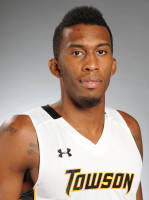
#1 Marcus Damas — SF, 6-7, 215
Senior, 24 years old
Season (31 mpg): 11.6 PPG, 5.3 RPG, 1.2 AST
44% FG, 37% three-point, 15.3 PER
Game: 8 pts, 4 rbs
2-6 FG, 4-4 FT
Outlook: Damas is a 6-7 small forward who primarily sets up on the perimeter. His biggest contributions come in the form of straight-line drives, and quick cuts to the basket. Damas is not a good shooter (44% FG, 31% on jump shots), but he contributes with his activity and hustle plays on both ends.
Damas has good size, but he lacks athleticism and skill, which severely limits his game. Offensively, he can’t finish at the basket, and has an inconcistent jump shot.
45% of his attempts are jump shots, but 91% of those are 3-pointers, where he’s converting only 37%. By any measure, he’s not a great offensive player.
Even more concerning is his lack of defensive ability. Opponents are shooting 46% against Damas in isolation, and 47% “off screens.” It’s even worse on film—he’s slow laterally, and can barely stay with his man. Very alarming.
Overall, Damas is good slasher for this Towson team. He recently eclipsed the 1,000-point mark, and has improved his production every season. But he lacks the handle, jump shot and touch offensively, and the quickness defensively. Good college player, but not close for the NBA.
Strengths
— Good size at 6-7; long arms
— Aggressive cutter/slasher; can finish with space
— Good length to contest jump shots
— Capable from 3-point range
Defects/Areas of Improvement
— 24 years old at Draft time
— Not a reliable shooter
— Limited athleticism; struggles to finish around the basket
— Inconsistent rebounder
— Terrible on-ball defender (poor footwork)
Video
Video: Offensive Rebounds/put-backs
— Long, active
Video: Good finishing on pick and roll
— Deceptively athletic when given a lane
Video: Cutting
Video: Poor jump shot
Video: Finishing Struggles
— No touch
Video: Isolation defense (poor)
— Consistently gets beat; very concerning

#11 Dion Nesmith — PG, 6-0, 200
Senior, 22 years old (via Monmouth, via Northeastern)
Season (34 mpg): 13 PPG, 2.6 RPG, 4.2 APG, 3.1 TO
39% FG, 40% 3-point, 72% FT
28.5% assist rate (111th nationally)
Game: 14 pts, 3 ast
5-10 FG, 3-5 three-point
Outlook: Nesmith is Hofstra’s point guard and primary ball handler in the half court. He moves the ball on the perimeter, hitting cutters as they cross his frame of vision. Nesmith has 114 total assists; Hofstra’s next two leaders have 106 combined.
That said, Nesmith is not a great passer. He posts a mediocre 1.35 assist/turnover ratio, and doesn’t hit teammates in their spots. He’s merely an intermediary who—using simple passes—creates some movement in the offense. He can knock down the occasional 3-pointer, but that’s pretty much it.
To recap: decent passer, capable shooter. Add in careless shot selection, and the result is a high-usage player (24% usage; second-highest on Hofstra) whose efficiency is volatile at best. Nesmith is more of a shooting guard in a point guard’s body.
Problem is, he’s 6-0, a limited athlete, and careless with the basketball.
Video
Video: Transition struggles
— Below-average athlete; struggles to finish in the open court
— As a result, often pulls up in transition (poor shot selection)
Video: Finishing Struggles
Video: Jump Shots
Video: 3′s Missed
— Capable shooter, but not efficient/reliable
Video: Assists

#23 Mike Burwell — G, 6-5, 200
Senior, 23 years old (via South Florida)
Season (30 mpg): 10.4 PPG, 4.7 RPG, 2.5 AST
41% FG, 34% three-point, 14 PER
Game: 15 pts, 4 rbs, 2 ast
4-10 FG, 2-4 three-point, 5-7 FT
Outlook: Burwell, who has good size for a guard (6-5), is Towson’s primary play-starter in the half court. He’s a below average shooter, converting 35% of his jump shots and 33% of his 3′s, yet the majority of his attempts are jumpers. That’s because he lacks the strength and athleticism to compete around the basket. He can’t finish in transition (35%; .73 PPP), and struggles to attack off the dribble.
Simply put, he’s an inconsistent shooter, and he’s incapable inside the 3-point line. Good size, but only 40% FG and 50% TS, along with no skill from 2-point range.
Video
Video: “Off the Dribble” Struggles
— Keeps the ball high when dribbling
Video: Shooting struggles (unguarded)
Video: Finishing around the basket
— No touch or athleticism, which negates his 6-5 frame
Video: Transition struggles
Video: Spot-Up Misses
Video: Isolation Defense (poor)
— Opponents scoring 1.04 PPP, ranking in the bottom 15th percentile nationally
NBA Prospects
1. Jerrelle Benimon — SF/PF, 6-8, 250
Senior, 22 years old (via Georgetown)
Season (35.6 mpg): 18.6 PPG, 11.4 RPG, 4 APG, 1.3 BPG
53% FG, 29% three-point, 72% FT
27.5 PER, 3 fouls per game
Using 29.4% of Towson’s possessions (65th nationally)
Game (26 min): 22 pts, 6 rbs, 1 ast, 4 fouls
7-10 FG, 1-1 three-point, 7-9FT
Outlook: For me, Benimon is a difficult prospect to evaluate.
He is the best player in the CAA, a lock to repeat as Conference Player of the Year, and he contributes across the board.
However, Benimon will be a role player should he make the NBA. Thus, it’s difficult to identify which aspects of his game will successfully translate to the next level.
The good: At 6-8, 250-pounds, Benimon is a combo-forward with a vast scoring arsenal. Offensively, he can face up or play with his back to the basket. Defensively, he can defend either forward position.
Benimon is balanced offensively—his shot distribution this season is 34% jump shots/46% around the basket/16% post up/4% runner. Quick first step to attack off the bounce, and a strong upper body to drive powerfully. When his jump shot and inside game are in sync, he is unstoppable inside the 3-point line. Off the ball, Benimon is adept at finding the open seams in the defense, leading to cuts and drop offs at the basket. He has the size and footwork to score from inside 17-feet.
Benimon is pretty much unguardable in the CAA. He scored 17 points on 6-7 shooting in the first half vs. Hofstra, a typical performance by his standards. He can pick and pop on the perimeter, and finish in the paint. “Give the ball to Jerrelle and let him operate” is Towson’s most frequent set this season.
Benimon is positionally interchangeable in the half court. He also has the requisite ball handling skills to lead—and finish—in transition.
Defensively, Benimon is a good perimeter defender, holding opponents to 20% shooting on jumpers. Disciplined and patient footwork, and great timing on his contests. He absorbs contact with his 245-pound frame, and has the motor to defend for 40 minutes.
Benimon is also a terrific rebounder, and passer from the high post. He averages 11.4 RPG, and his 25% defensive rebounding percentage ranks 28th nationally. His wide build, desire to rebound, and vertical athleticism from a stationary position enable him to rebound through traffic. Benimon wants to rebound, from both the perimeter and the paint, with a clear second-and-third effort on film.
Passing-wise, Benimon is averaging 3.7 assists per game, and his 27.8% assist rate ranks 6th in the CAA. He had only 1 assist vs. Hofstra, but on film, he has terrific vision from the foul line area. When the defense converges for a double team in the post, Benimon can pass out of traps, with cross-court accuracy. He hits open cutters, and can pass while in motion. Good stuff here.
The bad: All that being said, Benimon’s production and impact must be contextualized. He plays in the CAA, a below-average league by any measure. Towson’s offense is specifically designed to get Benimon touches. He is the main cog in Towson’s attack; not an ancillary piece like he’d be in the NBA. Again, does he excel in any facet of the game to become a solid role player?
To his credit, Benimon has taken care of business. And to even more credit, he’s played well in the non-conference (21 points and 10 rebounds at Kansas; 11 points and 6 rebounds at Villanova; 32 points and 10 rebounds vs. Temple). At Allen Fieldhouse in November, Benimon consistently scored over Joel Embiid, using pump-fakes, counter-moves and fade-away jumpers. It was a tedious approach, but it worked, and lent credence to his soft touch.
But for all the skill Benimon possesses—versatility scoring the ball, good rebounder and passer—I still have reservations. Firstly, although he shoots 53% FG/59% true shooting percentage, Benimon needs touches to be effective. 27% of his offense is isolation, while 13% is post-up situations. He’s been molded as the centerpiece scorer, not a role player. What could he bring beyond scoring? Any specific contributions without the basketball?
Secondly, Benimon lacks the size (6-8, short arms) and athleticism to be an interior force in the NBA. Against Kansas, he had to scratch and claw for everything in the paint. Such an arduous approach is not sustainable over 82 games.
Thirdly, Benimon uses a lot of dribbles to create separation. He won’t be afforded a 35-second clock in the NBA, and again, he’ll be playing within the framework of an actual offense.
Without proper size and athleticism, and at 22 years old, can Benimon extended his range beyond 17-feet? These are not rhetorical questions; I’m legitimately curious.
Maybe he can contribute as a catch-and-shoot stretch forward. But as of now, I doubt that. Per Synergy, of his 100 jump shot attempts this season, only 8 have been catch and shoot, while 54 have come off the dribble. Additionally, his range is very limited, shooting 29% from 3-point range this season.
In summary, I think Benimon will struggle at the next level due to average athleticism, tendency to over-dribble, and limited range. If he can extend his range, he’ll have solid pick and pop potential, which could stretch the defense and open up driving lanes. But developing a jump shot is easier said than done.
I have concerns defensively as well. While statistics measure Benimon as an “excellent” isolation defender, I disagree. Firstly, he has short arms, which makes defending the post very difficult. But more importantly, watching on film, Benimon clearly struggles to contain perimeter penetration. He stays upright in his stance, and is slow on his feet. Opposing players routinely drive by Benimon and penetrate the lane, regardless if they finish the basket.
So yes, Benimon is a solid defender in terms of timing and contesting shots. But he has poor footwork, which leads to porous—if not terrible—defense.
Overall: Benimon’s versatile scoring and aggressiveness on the glass make him a valuable prospect. An improved jumper will open up driving lanes, and maximize his near perfect touch around the basket. Most importantly, though, he needs to improve his on-ball defense. If he measures good enough at the combine, his offensive talent warrants second-round Draft consideration.
Strengths
— Combo-forward with vast scoring arsenal
— Aggressive and gracious to finish on the block; pure jumper to 17-feet
— Top-30 defensive rebounding percentage
— Second-leading passer in CAA (can pass from high post, spot cutters, or pass out of traps)
— Terrific pick and pop potential
— A scorer by nature (has produced consistently all year long)
Defects/Areas of Improvement
— Short wingspan
— Limited height and athleticism; needs to extend game to perimeter
— Poor 3-point shooter (29%)
— Clearly struggles going left
— Struggles containing penetration
— Lacks athleticism and size to defend post players at the next level
— Potentially “position-less” on both ends of the court (lacks handle/jumper to play SF in the NBA; lacks footwork to defend SFs, size to defend PFs)
Video
Strengths
Video: 22 Points vs. Hofstra
Video: Non-conference scoring (21 points vs. Kansas; 11 points vs. Villanova; 32 vs. Temple)
Video: Put-Backs
— 11% of Benimon’s attempts this season are on offensive put-backs, where he’s converting 66% of his attempts. Relentless second effort.
Video: Mid-Range Shots
— Benimon is a reliable mid-range shooter (38%), but sometimes he over-dribbles. He has good form on his shot, releasing the ball at its apex.
Video: “Post Up” Points
— Benimon is a crafty scorer in the paint, with a strong frame to back down his opponent. Clearly favors shooting over his right shoulder.
Video: Isolation defense (excellent)
— 15% of his possessions defensively, holding opponents to 11% shooting.
— Good patience and balance; keeps hands in offensive player’s grill; good timing on contest. That said, I still have concerns…
Video: Cutting/Slashing
— Nimble feet. Finds creases off the ball, and has requisite touch/strength to finish below the foul line.
Video: Pick and Pop
— Small sample (11-18 on the season), but Benimon has pick and pop potential.
— Very effective driving to the basket off the “pop.”
Video: Handling the Ball in transition
— Has a “watch out, coming through traffic!” effect in the open court. Tight handle to go coast to coast.
Video: Passing/Court Vision
— 3.7 APG; 27.8% assist rate ranks 6th in the CAA; second in the CAA in total assists
— Can pass from high post; keeps the ball high and surveys the defense
Video: Deceptive athleticism
— Benimon is not a “high flyer,” but he’s flashed explosive ability in fits and starts.
Defects/Areas of Improvement
Video: Misses
Video: Struggles driving left
— Benimon is clearly uncomfortable going left.
— 5-25 driving left this season; comparatively, he’s 23-46 driving right.
Video: Missed 3′s
— As mentioned, Benimon is shooting 29% from 3 (9-31 on the year). Limited range.
Video: Fouling
— 3 fouls per game (36 min)
— “Bites” on shot-fakes
Video: Protecting the middle of the court
— Poor footwork, struggles to contain penetration
— Lunges for steals; gambles
— Major concern here
Next Tier
#31 Moussa Kone — PF/C, 6-7, 220
Junior, age unknown to me
Season (21 mpg): 7 PPG, 5.8 RPG, 1.1 BPG
54% FG, 17.7 PER
Game: 8 pts, 12 rbs, 6 blks
4-8 FG
*Midway through his freshman season, Kone discovered he was legally blind in his right eye. He is literally playing with one functioning eye. Impressive and commendable, to say the least.
Outlook: A 6-7 power forward, Kone was the most athletic player in this game. Extremely raw offensively, but defensively, he impacted every possession that came his way. Kone roamed the back line of Hofstra’s 2-3 zone, finishing with a game-high 6 blocks. Long, bouncy, and terrific timing.
He recorded 6 blocks, but altered at least five more shots. He has a high motor, and has a contagious energy that trickles down to his teammates.
Kone attempts only 5.4 shots per game. But again, he makes his mark roaming the paint defensively, and running the floor offensively. I ‘m not sure whether Kone can defend one-on-one (Hofstra played zone most of the game), but he’s a terrific help defender, and protects his area of the zone.
Offensively, Kone attempts 95% of his attempts in the paint. Strong left hand, but he struggles to score outside the immediate vicinity of the basket. Agile and bouncy for put-backs, but not a threat in the post.
Going forward, Kone needs to add muscle to withstand contact on both ends. He also must develop some semblance of a jump shot (only 4% of attempts are jumpers). He’s an impactful defender and rebounder, but considering his 6-7 size, the offensive contributions are far below an NBA level.
With a refined offensive game, he could average a double-double as a senior, and become a defensive juggernaut in the CAA.
Strengths
— Explosive leaper
— Terrific length and timing to block shots, both in the paint and transition
— Active and athletic for put-backs and clean-ups
— Aggressive and physical on offense
Defects/Areas of Improvement
— 95% of offensive attempts in the paint (he’s only 6-7; needs to develop a perimeter game)
— No feel offensively (can’t dribble, poor shooter)
— No right hand whatsoever
— 3.4 fouls in only 21 minutes per game (undisciplined, tries to block everything)
— Only 5.4 shot attempts per game (limited impact if he’s not blocking shots)
— Simply put, very raw skill-set
Video
Video: Defensive Prowess/Potential
Video: Put-Back Makes
— Runs floor, athletic, bouncy
Video: Cutting, slashing, roaming paint on offense
— Agile, can finish around the basket
— Favors left hand
Video: Put-Back Misses
Video: Misses
— Not terrible misses, just needs to develop better touch
— No jumper
— Again, no right hand
#3 Zeke Upshaw — SG/SF, 6-6, 215
Senior, 23 years old (via Illinois State)
Season (36.3 mpg): 19.4 PPG, 4.3 RPG, 2 APG, 2.9 TO
40% FG, 34% three-point, 74% FT, 18 PER
Using 30% of Hofstra’s shots (91st nationally)
Game: 33 pts, 4 rbs, 3 ast, 6 to
9-21 FG, 3-10 three-point, 12-12 FT
Outlook: Upshaw is a 6-6 swingman whose first instinct is to score. His size allows him to get clear shooting looks, either curling off screens or in spot-up situations. Without a quick first step, he curls off screens to catch and penetrate, where he can attack and leverage his size to accumulate free throws (6.8 FTA). Careless shot selection, but he provides a scoring output that Hofstra desperately needs.
Upshaw transferred from Illinois State this season, via the graduate transfer rule. Quite a remarkable spike in production:
2010-11 (ILST): 5.3 MPG, 0.9 PPG, 0.4 RPG, 0.2 APG
2011-12 (ILST): 5.4 MPG, 1.4 PPG, 0.6 RPG, 0.1 APG
2012-13 (ILST): 7.4 MPG, 2.4 PPG, 1.1 RPG, 0.6 APG
2013-14 (HOF): 36.4 MPG, 19.7 PPG, 4.2 RPG, 2 APG
Now at Hofstra, he is the Pride’s go-to scorer. He’s shooting 40% from the field, and 35% from 3. Not efficient, but he gets the job done; he’s scored over 25 points in eight games, including a 37-point performance at Richmond.
That said, he has poor form (releases the ball from his chest) and shot selection. He’s also slow off the bounce—which would severely hamper him at the next level—and he is an average athlete.
Upshaw can grab rebounds due to his 6-6 frame, but I wouldn’t say he consistently competes on the glass. He averages 4.2 rebounds, but produces only a 3.3% offensive rebounding percentage, and 10.3% defensive rebounding percentage, average marks at best.
Additionally, he posts a negative assist-to-turnover ratio, which speaks to a) his limited offensive game, and b) a tendency to force plays.
Overall, Upshaw is Hofstra’s go-to scorer. He draws foul and has range on his shot. But he doesn’t contribute in other areas, and I can’t imagine Upshaw scoring against NBA competition.
I suspect he’ll earn a paycheck playing basketball somewhere next season, but not in the NBA.
Strengths
— Good size at 6-6
— Excellent curling off screens; terrific range on jump shot
— Volume scorer; capable of getting hot and scoring in bunches
— Polished “runner” down the lane
— Decent rebounder
Defects/Areas of Improvement
— Lacks quickness off the bounce
— Careless shot selection, leading to 40% FG and 34% 3-pointers
— Releases the ball from his chest
— Inconsistent rebounder
— Poor facilitator (doesn’t do much besides score)
— Will struggle to score in the NBA (he’s a good scorer, but Upshaw has never “imposed his will” scoring the basketball)
Video
Video: 33 points vs. Towson
— Good size
Video: Misses (9-21 vs. Towson, 9-18 vs. Delaware)
Video: Drawing Fouls
— 6.8 FTA per game
Video: Finishing Struggles
— 23% of shots are around the basket; 1.1 PPP ranks in the 47th percentile nationally
Video: Runner
— Only 27 attempts on the season, but film shows he has soft touch in this pocket of the court
Video: Struggles to create off the dribble
— Excessively dribbles, leading to difficult shot attempts
Video: Curling Off Screens (excellent)
— Most effective way to score. Shooting 45% off screens
Video: Perimeter Defense (contesting jump shots)
— Good length to contest shots. Holding opponents to 30% shooting off the dribble
Important for Their Team, But Not NBA Caliber
#1 Marcus Damas — SF, 6-7, 215
Senior, 24 years old
Season (31 mpg): 11.6 PPG, 5.3 RPG, 1.2 AST
44% FG, 37% three-point, 15.3 PER
Game: 8 pts, 4 rbs
2-6 FG, 4-4 FT
Outlook: Damas is a 6-7 small forward who primarily sets up on the perimeter. His biggest contributions come in the form of straight-line drives, and quick cuts to the basket. Damas is not a good shooter (44% FG, 31% on jump shots), but he contributes with his activity and hustle plays on both ends.
Damas has good size, but he lacks athleticism and skill, which severely limits his game. Offensively, he can’t finish at the basket, and has an inconcistent jump shot.
45% of his attempts are jump shots, but 91% of those are 3-pointers, where he’s converting only 37%. By any measure, he’s not a great offensive player.
Even more concerning is his lack of defensive ability. Opponents are shooting 46% against Damas in isolation, and 47% “off screens.” It’s even worse on film—he’s slow laterally, and can barely stay with his man. Very alarming.
Overall, Damas is good slasher for this Towson team. He recently eclipsed the 1,000-point mark, and has improved his production every season. But he lacks the handle, jump shot and touch offensively, and the quickness defensively. Good college player, but not close for the NBA.
Strengths
— Good size at 6-7; long arms
— Aggressive cutter/slasher; can finish with space
— Good length to contest jump shots
— Capable from 3-point range
Defects/Areas of Improvement
— 24 years old at Draft time
— Not a reliable shooter
— Limited athleticism; struggles to finish around the basket
— Inconsistent rebounder
— Terrible on-ball defender (poor footwork)
Video
Video: Offensive Rebounds/put-backs
— Long, active
Video: Good finishing on pick and roll
— Deceptively athletic when given a lane
Video: Cutting
Video: Poor jump shot
Video: Finishing Struggles
— No touch
Video: Isolation defense (poor)
— Consistently gets beat; very concerning
#11 Dion Nesmith — PG, 6-0, 200
Senior, 22 years old (via Monmouth, via Northeastern)
Season (34 mpg): 13 PPG, 2.6 RPG, 4.2 APG, 3.1 TO
39% FG, 40% 3-point, 72% FT
28.5% assist rate (111th nationally)
Game: 14 pts, 3 ast
5-10 FG, 3-5 three-point
Outlook: Nesmith is Hofstra’s point guard and primary ball handler in the half court. He moves the ball on the perimeter, hitting cutters as they cross his frame of vision. Nesmith has 114 total assists; Hofstra’s next two leaders have 106 combined.
That said, Nesmith is not a great passer. He posts a mediocre 1.35 assist/turnover ratio, and doesn’t hit teammates in their spots. He’s merely an intermediary who—using simple passes—creates some movement in the offense. He can knock down the occasional 3-pointer, but that’s pretty much it.
To recap: decent passer, capable shooter. Add in careless shot selection, and the result is a high-usage player (24% usage; second-highest on Hofstra) whose efficiency is volatile at best. Nesmith is more of a shooting guard in a point guard’s body.
Problem is, he’s 6-0, a limited athlete, and careless with the basketball.
Video
Video: Transition struggles
— Below-average athlete; struggles to finish in the open court
— As a result, often pulls up in transition (poor shot selection)
Video: Finishing Struggles
Video: Jump Shots
Video: 3′s Missed
— Capable shooter, but not efficient/reliable
Video: Assists
#23 Mike Burwell — G, 6-5, 200
Senior, 23 years old (via South Florida)
Season (30 mpg): 10.4 PPG, 4.7 RPG, 2.5 AST
41% FG, 34% three-point, 14 PER
Game: 15 pts, 4 rbs, 2 ast
4-10 FG, 2-4 three-point, 5-7 FT
Outlook: Burwell, who has good size for a guard (6-5), is Towson’s primary play-starter in the half court. He’s a below average shooter, converting 35% of his jump shots and 33% of his 3′s, yet the majority of his attempts are jumpers. That’s because he lacks the strength and athleticism to compete around the basket. He can’t finish in transition (35%; .73 PPP), and struggles to attack off the dribble.
Simply put, he’s an inconsistent shooter, and he’s incapable inside the 3-point line. Good size, but only 40% FG and 50% TS, along with no skill from 2-point range.
Video
Video: “Off the Dribble” Struggles
— Keeps the ball high when dribbling
Video: Shooting struggles (unguarded)
Video: Finishing around the basket
— No touch or athleticism, which negates his 6-5 frame
Video: Transition struggles
Video: Spot-Up Misses
Video: Isolation Defense (poor)
— Opponents scoring 1.04 PPP, ranking in the bottom 15th percentile nationally